The average cost custom closet project is not a single number you can pull from a catalog. A small reach-in with two hanging rods and a shelf might cost $1,500, while a properly built walk-in with drawers, lighting, and an island can pass $15,000. The useful question is not whether custom storage is expensive. It is what your room, wardrobe, and construction work actually require.
I have designed closets in Oklahoma City homes ranging from narrow 5-by-7-foot reach-ins to 12-by-14-foot dressing rooms. The expensive mistakes were rarely the drawer color. They were door swings that blocked access, shelves installed too deep to reach, and electrical outlets forgotten behind finished panels. Price the room in the right order: structure, layout, storage components, and finish details.
Average cost custom closet ranges by project type
For a basic reach-in closet, plan on roughly $1,500 to $4,000 for a professionally measured and installed system. This usually includes laminate towers, hanging rods, adjustable shelves, and a few accessory sections. A do-it-yourself IKEA PAX or ClosetMaid configuration can cost less, often $600 to $2,500 in materials, but installation, wall preparation, fillers, and trim add labor.
A modest walk-in closet commonly falls between $4,000 and $10,000. That range covers two or three storage walls, double-hang sections, long-hang space, shoe shelves, drawers, and installation. A larger room with an island, glass doors, upgraded hardware, or painted cabinetry can reach $12,000 to $25,000 or more. The average cost custom closet quote climbs quickly when the project includes drywall changes, new flooring, recessed lighting, or an HVAC adjustment.
California Closets, The Container Store's Elfa systems, and local cabinet shops all occupy different price positions. Elfa is often a practical choice for adjustable wire or ventilated shelving. Factory-built laminate systems give a more finished appearance without the price of fully custom cabinetry. A local cabinetmaker can solve unusual corners and ceiling heights, but labor and finishing time usually push the total higher.

The room's bones come before the storage package
Before discussing drawer fronts, inspect the walls. A standard closet tower needs a reliable fastening surface. In older homes, studs may not land where the plan expects, and plaster or uneven drywall can complicate installation. Mark stud locations, measure every wall at the floor and ceiling, and check whether baseboards will force the cabinets forward.
Door swing is another budget issue disguised as a layout issue. A hinged door that opens into a narrow aisle can steal 30 inches or more from usable clearance. A pocket door may improve access, but adding one involves framing, drywall, trim, and paint. Bypass doors save swing space but can hide part of the closet even when fully open. I prefer to solve the door before ordering storage, not after a tower is already on the truck.
The same rule applies to lighting. A single ceiling fixture often leaves your face in shadow while you search for a black sweater. Add a ceiling fixture, wall sconces, or LED strips under shelves, and plan the electrical circuit before panels cover the walls. An electrician might charge several hundred dollars for a straightforward fixture and switch installation, while moving wiring after installation can cost much more.
What increases the average cost custom closet quote
Drawers are usually the first major upgrade. A stack of four to six full-extension drawers can add $800 to $2,500 depending on width, hardware, and construction. They are worth considering for folded clothes, undergarments, and accessories because they prevent the floor-level pile that forms beneath open shelves. They are less useful for bulky sweaters or items you reach for once a season.
Long-hang space also requires discipline. Dresses, coats, and robes need about 60 to 70 inches of vertical clearance, while double-hang sections can use roughly 40 inches for shirts and 40 inches for pants or skirts. If your plan fills every wall with short hanging rods, you will pay for storage that cannot hold the wardrobe you own.
Material changes matter. Melamine and laminate are durable, easy to wipe clean, and usually the best value. Veneer brings a real-wood surface but costs more. Painted MDF offers a furniture-like appearance, though it needs careful finishing and can show edge damage. Solid wood is not automatically better for every closet; it is heavier, pricier, and often unnecessary for stationary cabinet parts.
Where to spend and where to cut
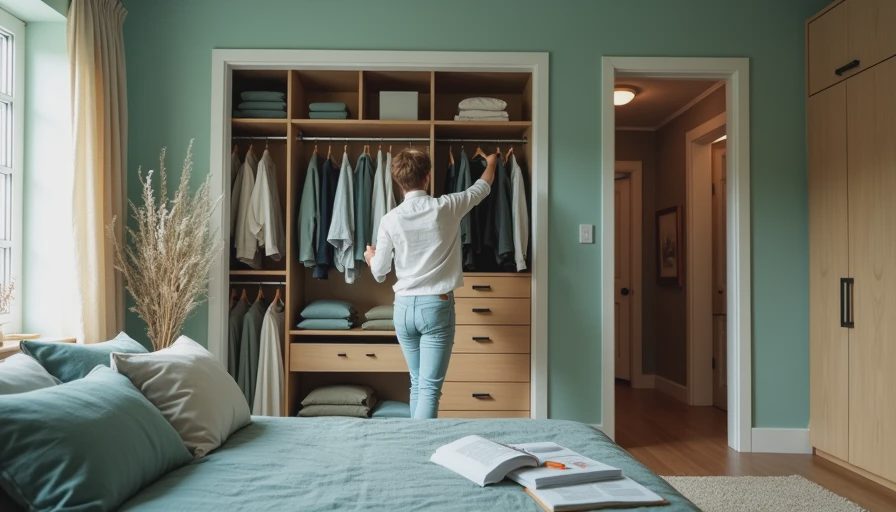
Spend first on the layout, drawer hardware, and lighting. A well-planned closet with standard white laminate will outperform a beautiful closet with no place for boots or long coats. Full-extension soft-close slides are useful because they let you see the back of a drawer and reduce slamming. Adjustable shelves are another sensible expense, especially if your wardrobe changes between Oklahoma summers and winter layers.
Cut decorative upgrades that do not improve access. Mirrored cabinet doors, crystal knobs, and a $3,000 island can consume a surprising share of the budget. An island also needs an aisle. I want at least 36 inches for a comfortable passage and closer to 42 inches when drawers or cabinet doors face each other. If the room cannot provide that clearance, use a narrow bench or no center furniture at all.
One client wanted a large island in a compact walk-in because every inspiration photo showed one. On paper it fit. In real use, the open drawers reduced the aisle to a cramped 24 inches. We replaced it with a 14-inch-deep shoe cabinet along the wall and gained usable floor space without losing storage. That is the kind of change that makes the average cost custom closet investment work harder.
How to compare quotes without comparing apples to oranges
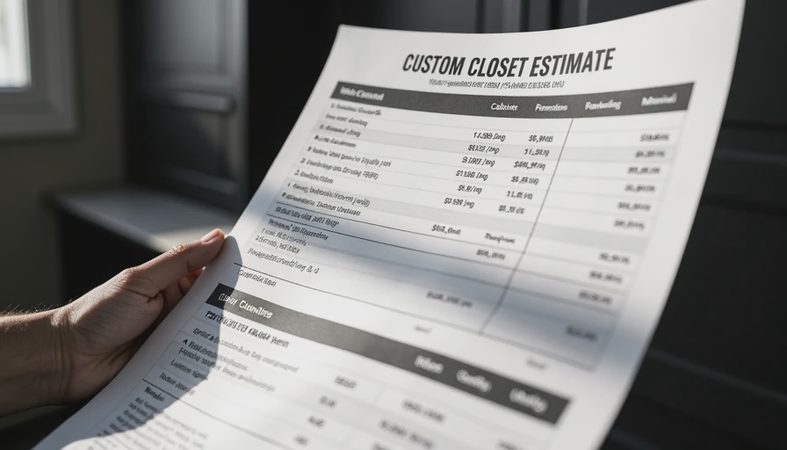
Ask each company for a drawing with dimensions, not just a computer rendering. The proposal should identify cabinet material, edge treatment, drawer count, hardware, installation, demolition, trim, taxes, and delivery. Confirm whether painting, electrical work, wall repair, and flooring are excluded. A $6,000 quote can become an $8,000 project if those items were assumed to be included.
Measure the wardrobe before the design appointment. Count long garments, folded stacks, shoes, handbags, and luggage. Note unusual items such as tall boots, sports equipment, or a collection of hats. A designer who knows the inventory can give every category a home instead of filling the walls with generic shelves.
For a fair comparison, request one version using standard laminate and another with your preferred upgrades. That shows the actual price of painted doors or upgraded drawers. It also gives you a useful fallback if the average cost custom closet proposal exceeds the amount you planned to spend.
A practical budget plan for the project
Start by setting aside 10 to 15 percent for surprises in an older house. Then divide the remaining budget into three parts: storage, installation, and room preparation. For a $7,500 project, that might mean approximately $5,000 for components, $1,500 for installation, and $1,000 for electrical, trim, or wall repairs. The exact split changes with the room, but the exercise exposes unrealistic expectations early.
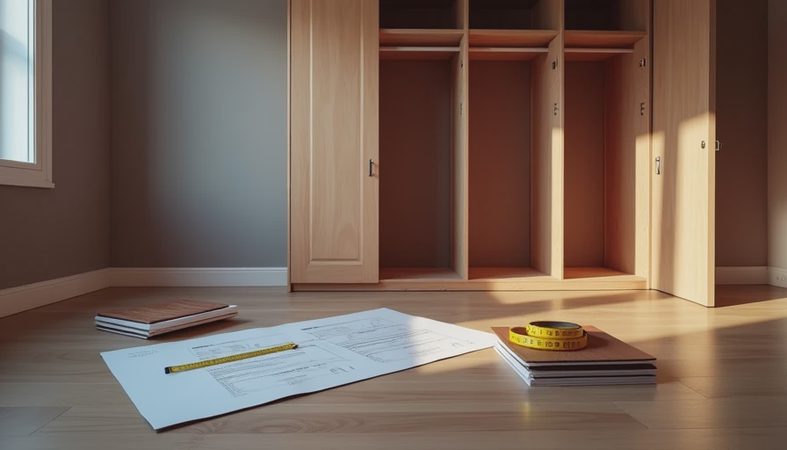
Schedule a site measure before demolition. Photograph outlets, vents, baseboards, and ceiling changes. Confirm the final door opening and ask where installers will anchor tall units. Tall cabinetry should be secured properly, especially in homes with children or earthquake concerns. Do not remove carpet or flooring until you know how the new system meets the finished floor.
The average cost custom closet should buy you easier mornings, not simply more boxes. Put money into the dimensions you will touch every day, protect the aisle, and let the room's structure guide the design. Once those decisions are sound, choose the finish and accessories that fit the budget rather than forcing the budget to support a picture.

No comments yet — be the first to share a thought.