If you are researching custom closets cost, you have probably already discovered that one company quotes $3,000 while another shows projects over $20,000. Both numbers can be legitimate. The difference usually comes from room size, material, drawer count, installation, and whether the project includes electrical or drywall work. I have designed and installed enough closets to know that the cheapest quote is not always the least expensive decision. A poor layout wastes every morning you use it.
What custom closets cost by project size
A small reach-in closet with adjustable laminate components commonly costs about $1,500 to $4,000 installed. That range assumes a straightforward wall system with shelves, hanging rods, and perhaps two or four drawers. A larger reach-in with multiple walls, better finishes, and more drawers often lands between $4,000 and $8,000.
For a walk-in closet, custom closets cost roughly $5,000 to $12,000 for a practical design in a modest room. A 6-by-8-foot closet with one or two hanging walls is a very different job from a 10-by-12-foot room with an island. Once you add an island, tall shoe storage, glass doors, thick wood-look panels, and extensive drawers, the budget can reach $15,000 to $30,000 or more.
Those figures generally describe the storage system and installation. They may not include flooring, painting, recessed lighting, a new door, baseboards, or moving a wall. Ask for those exclusions in writing. A $7,000 closet can become a $10,000 room after electrical and finish work are added.
The five choices that move the price
The first cost driver is linear footage. More wall coverage means more panels, shelves, rods, hardware, and labor. A single-wall reach-in is efficient. Wrapping three walls in a walk-in costs more, even if the room itself is small.
The second is material. Melamine and laminate are common because they are durable, easy to clean, and available in finishes that resemble painted wood. Thermally fused laminate systems from companies such as ClosetMaid or The Container Store are often positioned below fully custom cabinetry. Higher-end providers, including California Closets, may offer thicker panels, upgraded finishes, integrated lighting, and more extensive design service. Pricing depends on the selected line, not just the brand name.
Drawers are the third major expense. A fixed shelf might cost relatively little, while one soft-close drawer requires a box, slides, a front, and installation time. Six drawers can add hundreds or several thousand dollars depending on construction. Put drawers where you actually fold underwear, watches, belts, or workout clothing. Do not fill every empty section with them.
Hardware also matters. Basic rods and shelf pins are inexpensive. Pull-down hanging rails, belt racks, valet rods, hamper pullouts, LED strips, and shoe fences each add cost. I specify these only when they solve a real problem. A valet rod is useful beside a dressing area; three valet rods in a closet that is already crowded are decorative spending.
Finally, site conditions can change the estimate. Uneven floors, out-of-square walls, plaster, blocked studs, and a door that swings into the storage zone all create labor. In older Oklahoma City houses, I measure twice because a wall that looks straight rarely is.
Start with the room, not the accessories
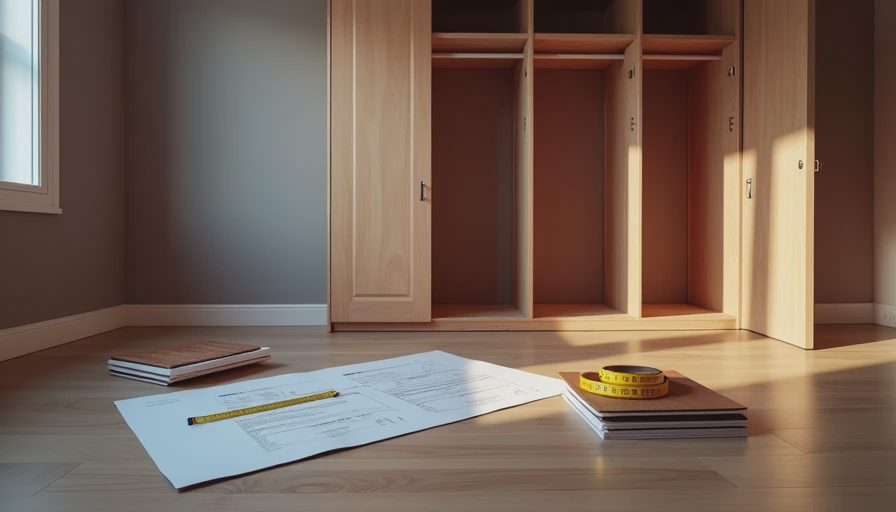
Before comparing custom closets cost, measure the room and draw the obstacles. Record the finished wall-to-wall dimensions, ceiling height, door width, door swing, windows, vents, outlets, switches, and visible plumbing. Locate studs if cabinets will be anchored to the wall. A professional installer can verify these measurements, but your sketch prevents an expensive surprise during the design appointment.
The main aisle should be at least 36 inches wide. If two people will dress at the same time, 42 to 48 inches is more comfortable. Standard hanging depth is about 24 inches, although a shallow wall may require a different arrangement. Double-hang sections usually need roughly 40 inches between rods, while long-hang space for dresses and coats often needs 60 to 68 inches.
Do not let an island consume the center of the room simply because the rendering includes one. I once reviewed a plan with a 30-inch-wide island in a closet where the remaining passage was barely 31 inches. It looked impressive on a screen and would have been irritating every morning. A narrower 18- to 24-inch island, or no island at all, would have provided better circulation and preserved access to every drawer.
Where the budget is worth spending
Spend first on the layout, anchoring, and finish quality. A well-planned system with standard laminate panels will serve you better than premium doors installed in the wrong locations. Make sure the installer fastens tall units securely and leaves clearance around doors, trim, sprinklers, and vents.
Lighting is another practical upgrade. A single ceiling fixture creates shadows under shelves and behind hanging clothes. If the walls are open, ask your electrician about switched ceiling lighting and low-voltage LED strips under shelves. A basic electrical change might cost a few hundred dollars, while extensive rewiring can run considerably higher. Plan outlets before the cabinets are installed; an outlet hidden behind a shoe tower is not useful.
Drawers are worth paying for when they replace a separate dresser or protect small items from becoming a heap. Soft-close hardware is a sensible upgrade for frequently used drawers. Glass doors, motorized racks, and built-in charging drawers should come after the basic storage works.
How to compare quotes without getting fooled
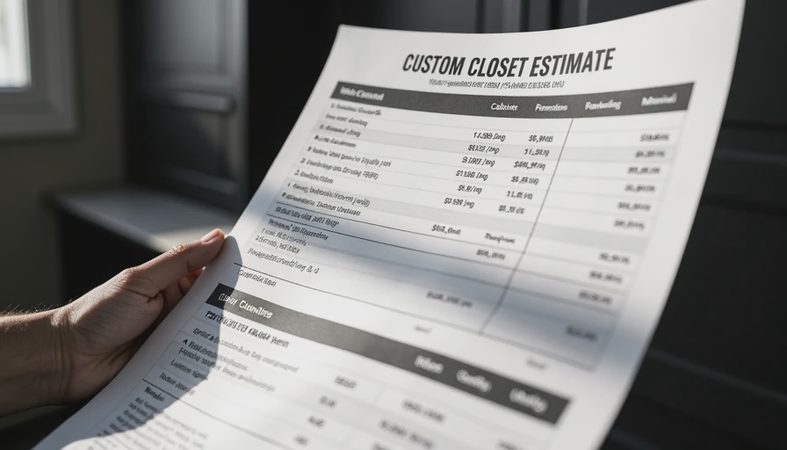
When comparing custom closets cost, place proposals side by side and identify what each includes. Check the number of linear feet, panel thickness, edge treatment, drawer construction, hardware, delivery, installation, removal of old shelving, and warranty. One quote may list ten drawers while another lists six, making the totals look comparable when they are not.
Ask whether the design is adjustable. Fixed shelves can be sturdy, but adjustable shelves allow you to change the room when your wardrobe changes. Ask how tall units are secured, how corners are handled, and whether the crew trims around baseboards or expects you to remove them.
Request a final field measurement before fabrication. If the company takes measurements only from your online form, treat the price as preliminary. Also confirm the payment schedule, lead time, and policy for damaged panels. A clear scope is more valuable than a glossy rendering.
For a simple reach-in, compare at least two local installers with one national provider. For a full walk-in, consider an independent designer who can separate cabinetry, lighting, paint, and flooring costs. That approach sometimes exposes where a package price is hiding unnecessary accessories.
A sensible budget for your wardrobe
For a functional 5-by-7-foot reach-in, I would budget $2,500 to $5,000 for a professionally installed system, depending on drawers and finish. For an 8-by-10-foot walk-in with two storage walls, a realistic starting point is $6,000 to $10,000. A larger dressing room with an island, extensive drawers, upgraded lighting, and finished walls can reasonably exceed $15,000.
Inventory your clothes before choosing a number. Count long garments, short-hang items, folded stacks, shoes, bags, and seasonal pieces. In Oklahoma, coats and summer clothing create very different demands, so leave room for rotation instead of forcing both seasons into one crowded rod. A clean inventory often saves money because it stops you from buying storage for items you do not own.
The best custom closets cost is the one attached to a layout that fits your actual habits. Get the structure right, protect the walking space, spend on lighting and durable hardware, and add showy accessories only after the daily work is solved. Then request detailed quotes and make the installer price the same plan, not three different versions of it.

No comments yet — be the first to share a thought.