
A deep closet organizer sounds like the answer to a storage problem, but depth alone does not make a closet work. In a 1940s Oklahoma City house, I have seen deep shelves swallow folded shirts, block a door swing, and leave an expensive row of hanging clothes in the dark. The right deep closet organizer uses the room's actual dimensions, your wardrobe, and the location of studs, outlets, and lighting. Start there, before buying matching hangers.
Measure the closet before choosing a system
Measure the finished wall, not the optimistic space on a listing sheet. Record each wall width, ceiling height, baseboard thickness, door casing, and the distance from the door opening to the first corner. A wall that looks like 8 feet can lose 5 inches to trim and another 3 inches to an uneven corner. Those inches determine whether a deep closet organizer fits cleanly or forces a filler strip that wastes valuable storage.
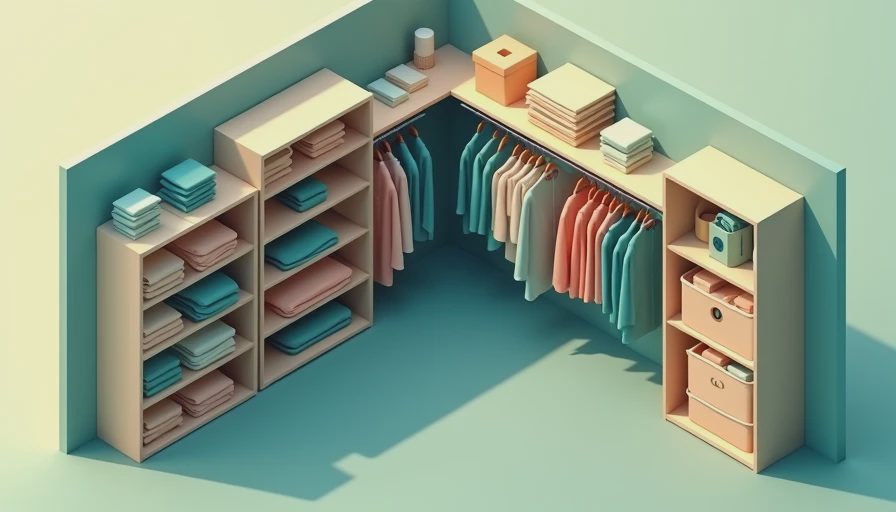
For most hanging clothes, 24 inches of usable depth is enough. That dimension accommodates a standard hanger and leaves a little breathing room for coats. Shelves holding folded sweaters generally work better at 12 to 16 inches deep. Going to 20 or 24 inches can create a second problem: the back half becomes a dark shelf where clothing disappears. If you need extra depth, reserve it for luggage, bulky bedding, or seasonal bins rather than everyday shirts.
The aisle matters just as much. I specify 36 inches as the practical minimum for a single-sided closet walkway. Forty-two inches feels considerably better when two people dress at once or when a door opens into the room. In a narrow reach-in, do not install a full-depth unit on both opposing walls without checking the clearance. Two 24-inch systems leave only a 12-inch passage in a 60-inch room, which is not a passage at all.
Match storage depth to the wardrobe
A deep closet organizer should be divided by function, not filled with identical cubbies. A client with long coats, wide-shouldered jackets, and floor-length dresses needs more hanging clearance than someone whose wardrobe is mostly knit tops. Measure your longest garments on a hanger. Long-hang sections usually need 60 to 70 inches from rod to floor, while shirts and folded trousers can use a double-hang arrangement with rods around 40 and 80 inches high.
Do not let a showroom convince you that every shelf should be 24 inches deep. Shoes are usually easier to see on 12-inch shelves, with 13 to 14 inches allowing room for larger footwear. Boots need height, not extra shelf depth. Give ankle boots about 8 inches vertically and taller boots 16 to 18 inches, depending on the shaft. A shallow shoe wall can hold more pairs because the front edges remain visible instead of becoming a pile.
Drawers are another place where depth gets misused. A 21-inch-deep drawer can hold folded jeans, but a drawer deeper than 24 inches often becomes a messy storage bin. For socks, undergarments, and accessories, 18 to 21 inches is easier to reach. Include drawer dividers only after you know what belongs inside. A divider cannot fix a drawer that is too deep for your habits.
Design around studs, doors, and electrical work
A freestanding system can tolerate some wall variation, but a wall-mounted deep closet organizer needs reliable fastening. Locate studs before the installation day. In older homes, studs may not land where a modular rail expects them, and plaster walls can crumble around an anchor. A plywood backer installed between studs is often a cleaner solution than filling a wall with questionable drywall anchors.
Check the door swing before ordering drawers. I once reviewed a plan where the first drawer bank opened directly into the bedroom door path. The measurements were technically correct, but the drawer could never open while the door was open. Reversing the hinge or shifting the drawer bank 8 inches would have solved the problem before installation. This is why a floor plan is more useful than an inspiration photo.
Lighting belongs in the construction discussion. A single ceiling bulb behind your head will cast a shadow over the shelves you are trying to use. A licensed electrician can place a flush fixture, recessed lights, or a switched LED strip system where it serves the hanging sections. Plan outlet locations before the shelves cover the wall, especially if you want a steamer, charging drawer, or small vacuum dock. One forgotten outlet can mean an extension cord across the floor.

Choose materials that survive daily use
Melamine is common in closet systems because it is affordable, easy to clean, and available in many finishes. A 3/4-inch panel with properly supported shelves is suitable for most clothing storage. Long shelves still need support; a 48-inch shelf loaded with shoes and denim can sag even when the material looks substantial. Add a vertical divider, center support, or shorter shelf span rather than trusting a decorative edge band.
Wire shelving costs less and ventilates well, but small items can tip through the openings. It also gives a utility-room appearance that does not suit every dressing area. Wood veneer or painted plywood costs more, often adding hundreds or several thousand dollars depending on the closet, but it provides a more finished look and better options for custom drawer sizes. The expensive material is not automatically the better choice if the layout is wrong.
Brands such as IKEA PAX, Elfa from The Container Store, and custom systems from California Closets approach the problem differently. PAX can offer strong value for a careful DIY planner, while Elfa is flexible for changing storage needs. Custom work is useful for sloped ceilings, unusual corners, integrated lighting, and precise drawer layouts. Compare the installed price, wall preparation, trim, and delivery rather than comparing cabinet prices alone.
Plan the installation in the right order
Empty the closet completely, then remove baseboards only if the system requires it. Mark the finished floor and the top of each cabinet on the wall with painter's tape. Install the most difficult fixed component first, usually the back wall or a tall tower. Level every rail and cabinet; a small error at one end becomes obvious when several drawers meet across the wall.
Leave access for doors, drawer pulls, and cleaning. A deep closet organizer should not sit so close to a corner that you cannot wipe behind it or remove a stuck hanger. If the closet has carpet, decide whether the system will sit on top of it or whether the carpet will be cut first. Carpet can compress under heavy cabinets and make an initially level installation shift over time. Hard flooring is easier to clean beneath open shelves, but it is not mandatory.
Before loading clothes, test every drawer fully open, walk the aisle with a laundry basket, and try the largest coat in each hanging section. Put frequently used items between waist and eye level. Store luggage, holiday clothing, and spare linens higher or deeper. This simple test catches more practical problems than another hour of browsing closet photos.
Spend money where it changes the result
Put the budget into strong mounting, useful lighting, full-extension drawers, and the dimensions your wardrobe actually requires. Decorative crown molding and glass doors can wait if they reduce hanging space or push the project beyond budget. A basic reach-in system with solid supports and thoughtful shelf heights will outperform a $6,000 installation that blocks its own drawers.
For a small closet, a deep closet organizer may cost roughly $400 to $1,500 for a modular setup before professional installation. Larger custom rooms can run several thousand dollars, especially with an island, specialty shoe storage, paint-grade cabinetry, and electrical work. Get the wall layout settled before requesting quotes so you are comparing equivalent scope.
The best deep closet organizer is not the deepest one available. It is the system that keeps your clothes visible, preserves a usable aisle, clears the door swing, and survives the weight you plan to store. Measure first, draw the room, and make the installer prove that every drawer and door can open. That discipline saves more money than a sale sticker ever will.


No comments yet — be the first to share a thought.