Shaker Style Closet Doors: A Practical Guide From a Closet Designer
When a homeowner asks me how to refresh a closet without ripping out the shelving, my answer is almost always the same: start with the doors. Shaker style closet doors are the workhorse of millwork for a reason — clean lines, flat center panel, square rails and stiles, and a profile that works in everything from a 1940s Tudor like mine to a 2025 new-build in Edmond. But before you order a pair from the big-box store, you need to know what you're buying, what it will cost, and where the hidden mistakes hide.
What Exactly Is a Shaker Door?
A shaker style closet door is a five-piece construction: two vertical stiles, two horizontal rails, and a flat center panel that sits flush or slightly recessed. No routed details, no arches, no applied molding. The simplicity is the point. It reads as furniture rather than a hollow-core slab, and it takes paint beautifully. Most of the shaker style closet doors I spec are paneled on both sides, but for a closet you can get away with a flat back if the interior won't be visible.
The term goes back to the Shaker design tradition — utilitarian, honest joinery. In modern millwork it has become the industry standard for what people mean when they say "five-piece door." You see it everywhere from $50 Masonite pre-hung units at Home Depot to $400 custom TruStile slabs. The design has been around long enough that it doesn't date, which matters when you're trying to sell a house later.
Hinged, Bypass, or Barn? Pick the Right Configuration
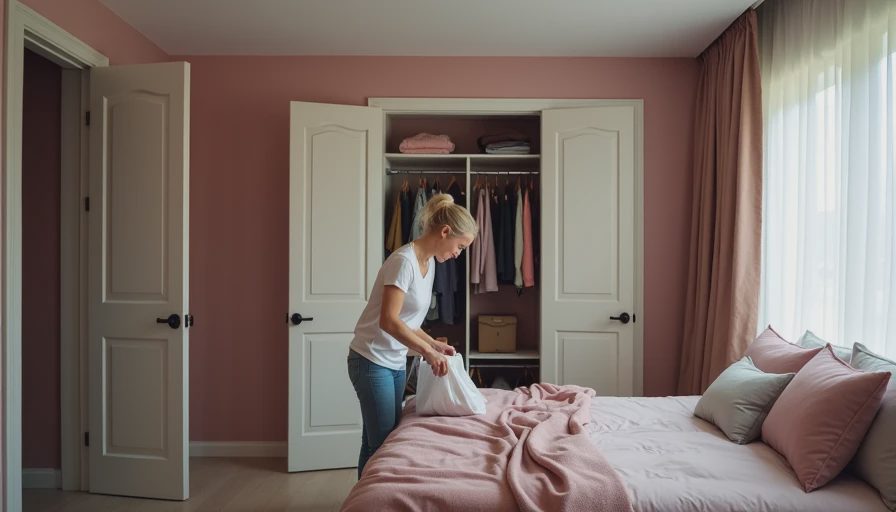
The biggest mistake I see in closet design is choosing a door style before thinking about clearances. For a reach-in closet along a bedroom wall, hinged doors are simplest: one door, 30 inches wide, swings into the room. That requires about 36 inches of clear floor space so you're not backpedaling over a bed frame. Bypass doors slide past each other on an upper track and need no swing room, but you only get access to half the closet at a time. Barn doors are the trend option, but I've installed exactly one that didn't create a headache — the wall you slide the door onto needs to be long enough and free of switches, outlets, and baseboard returns.
Material Matters: MDF, Solid Wood, and the Budget Difference
When clients ask about shaker style closet doors, the first question is almost always wood species. For painted interiors, 50 percent of the doors I install are MDF core with a primed skin. MDF resists warping across wide panels, and because the door is painted rather than stained, you don't lose any wood grain character. A set of two 30-inch pre-hung MDF shaker doors runs about $120 to $180 at Lowe's or Home Depot.
If you're matching existing stained trim, go with poplar or maple. Poplar is the workhorse in my shop for paint-grade jobs; maple when the stain has to match. Solid wood shaker style closet doors from Simpson or Jeld-Wen will run $200 to $400 per door, and custom sizes go up from there. What you're paying for is the joinery — coped or mitered corners, tenoned rails, and a panel that actually floats in the stiles instead of an MDF molded core.
What to Check Before You Order
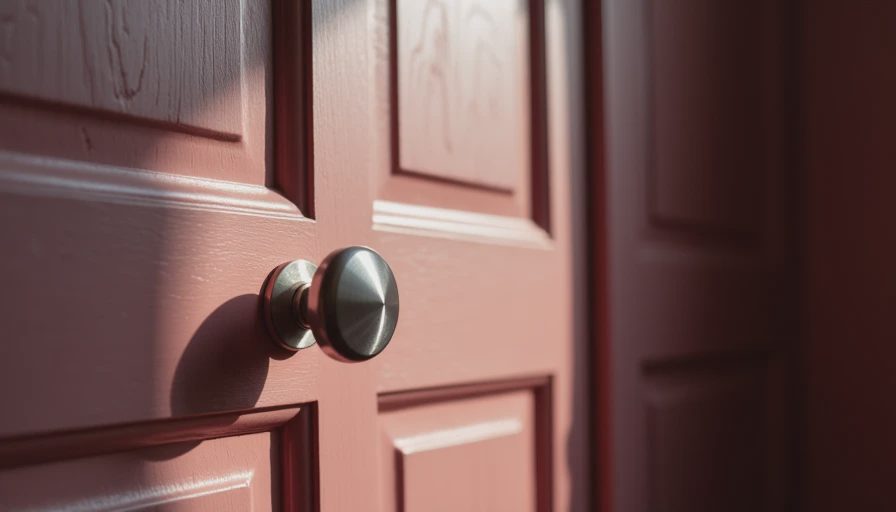
Before you order anything, grab a tape measure and check four things. First, the rough opening width and height; closet openings in older homes are often off-sized by a half-inch. Second, the swing direction — you want the door to swing flat against the bedroom wall, not into a light switch. Third, the floor level; a barn door or bypass track won't hang straight if the floor has more than a quarter-inch drop across 36 inches. Fourth, the trim situation. Pre-hung units come with stop molding, but if you're replacing just the slabs, you'll need the door thickness — standard is 1 3/8 inches for interior doors, not 1 3/4.
Installation: What You Can DIY and What to Hand to a Pro
Installing a pair of pre-hung shaker style closet doors is a weekend job if you're comfortable with a level, shims, and a cordless drill. The key is to plumb the jamb before you screw the hinge side, then pack shims behind the latch side. A lot of first-timers hang the door level and then wonder why it won't latch — the issue is usually the head jamb, which has to be square, not just level.
I'd hand a pro the job if you're dealing with a structural header that's sagging, if the opening isn't square by more than a quarter inch, or if you need to reframe the opening entirely. That reframing work typically runs $300 to $600 in Oklahoma City. But swapping slabs or installing pre-hung units in a standard opening is well within DIY reach.
My Honest Take After 200 Installations
After eight years and a couple hundred closet installations, shaker style closet doors are still my default for almost any residential closet. They hide dust, they hide wardrobe chaos, and they don't compete with the architecture. What I tell clients is to skip the cheapest hollow-core units — the panel face is so thin it telegraphs every bang, and the paint tends to peel at the seams. Spend the extra $40 per door for an MDF five-piece construction.
Also, don't forget door pulls. A great shaker door deserves a substantial handle. I'm partial to a 6-inch brushed nickel bar pull at about $25 each, but a simple round knob works too. The most common regret I hear is people trying to save money by keeping a cheap hollow-core door and painting it — the panel lines are never crisp, and the whole room reads cheaper than it is.




No comments yet — be the first to share a thought.