Before you order a single drawer pull, decide on the door. Closet door styles get treated as an afterthought, but the door is the first thing you touch at 6:15 AM and the last thing you close at night. Get it wrong and you will wrestle a bifold track every morning. Get it right and the door disappears into the wall, which is exactly what a working closet should do.
Start With the Swing, Not the Look
The biggest mistake I see is picking a door because someone pinned a photo of a barn door. A standard 30-inch door swings into the room and needs about 36 inches of clear arc. In a small walk-in, that arc blocks the aisle. In a bigger dressing room, an inward-swinging door fights with the island drawers. I spec outswing doors where the wall allows it, or I get rid of the swing entirely.
Measure the opening before you fall in love with a style. For a reach-in closet, the rough opening is your starting point. For a walk-in, you are choosing the entrance door, but the same rules apply. You need 36 inches of clearance in front of the door, and you need to know where the door sits when it is open. If it covers a light switch or crashes into a shelf, no style will save you.
The Main Closet Door Styles Worth Your Money
When I talk through closet door styles with clients, I group them into four families: bifold, bypass sliding, barn door, and pocket. Each solves a different space problem, and each has a trap.
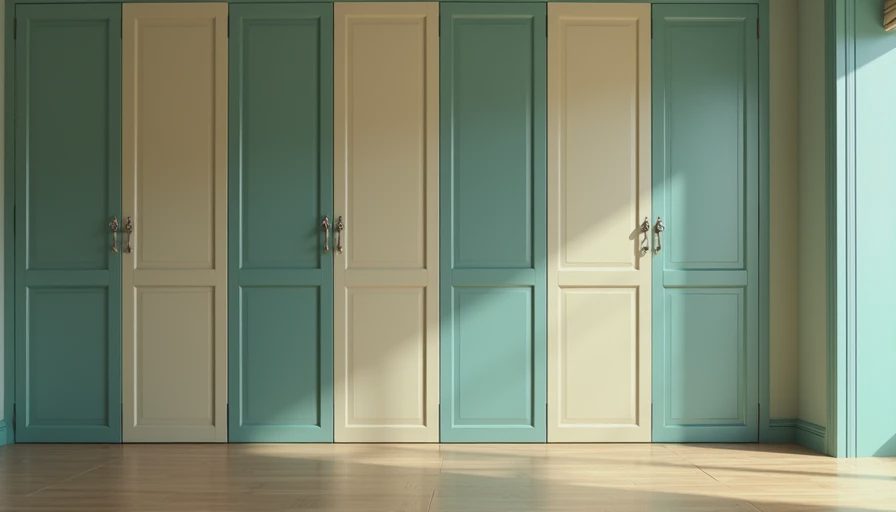
Bifold doors are the default in most tract homes. They are cheap, easy to install, and fit a 48-inch or 60-inch opening without eating floor space. The downside is the track. The top track flexes, the bottom pivots pop out, and on an unlevel floor the panels drag. A good bifold with a reinforced metal track is fine, but the $79 builder-grade version will annoy you within a year.
Bifold: The Budget Workhorse
If your budget is tight, buy the best bifold hardware you can find and a solid-core slab. Masonite and Jeld-Wen make decent prefinished bifold units for around $100 to $200 per opening. Spend extra on a track system with ball-bearing rollers and a floor guide. I have installed these in rental apartments, and they last if the track is metal, not plastic.
The real limit is width. A four-panel bifold spanning 72 inches has a lot of moving parts. If you have a 96-inch opening, skip bifolds. They sag in the middle and the gaps drive you crazy. For openings up to 60 inches, bifold can work. Past that, look at bypass or pocket doors.
Sliding and Barn Doors: The Space Saver That Has to Be Done Right
Bypass sliding doors use two tracks and panels that slide past each other. They take no swing space and work well on a 60- or 72-inch closet front. The common complaint is the bottom track catching dust and the panels being heavy to push. Buy a top-quality track, keep the bottom track clean, and they are a solid choice. Expect to pay $200 to $500 for a decent two-panel set.
Barn doors are the trend that gets overbuilt. A barn door needs a clear wall beside the opening to park the door. That sounds obvious, but I have seen a 36-inch barn door installed next to a light switch, so the switch is unreachable when the door is open. The door also needs reinforced framing in the wall to hold the track. I use 12-inch blocking at each mounting point. If you love the look, budget for a real track system from a brand like Johnson Hardware and skip hollow-core slabs. You will spend anywhere from $300 to $1,000 before hardware and finish.

Pocket Doors: The One I Spec Most Often
If the wall beside your closet opening is not load-bearing, a pocket door is my favorite answer. It slides fully into the wall, so it takes zero room inside or outside. That frees up wall space for hooks, a valet rod, or a full-length mirror.
The catch is cost. A pocket door frame kit runs $200 to $500, and the labor to cut into a finished wall is not trivial. You also lose usable wall inside the pocket, which matters if you planned to hang rods there. Before you commit, check for electrical or plumbing in the wall. I had a client who forgot, and the installer had to reroute an outlet, adding $250 to the job. If you are building or renovating, frame the pocket during rough-in and it costs almost nothing extra.
Which Closet Door Styles Make Sense for a Small Reach-In?
For a typical 60-inch reach-in closet, my default is a pair of sliding bypass doors with frosted glass inserts. They don't swing into the room, they cover the full opening, and they hide a chaotic shelf. If you want something warmer, a single 36-inch outswing door works, but you need the floor space in front.
If you are stuck between closet door styles, use this test: does the door swing into something? Switch to sliding or pocket. Does the wall beside the opening have extra clearance? A barn door is fine. Does the wall have plumbing or electrical? Pocket is probably out. That test covers 90% of the rooms I walk into.
If you want a second set of eyes on your closet plan, send me a note before you buy a single door.



No comments yet — be the first to share a thought.