High-capacity wardrobe systems for seasonal rotation are not simply a matter of adding more shelves. The room has to support the way you dress in January, July, and the awkward weeks between them. That means measuring hanging lengths, protecting usable aisle space, planning for heavy coats, and deciding where off-season clothing will live before anyone installs a drawer.
I start every closet project at the walls, not the accessories. Find the studs, confirm the door swing, locate electrical boxes, and measure the finished depth after drywall. A system that holds a large wardrobe but leaves you standing sideways in the aisle is not high-capacity; it is badly planned storage.
Start With the Room, Not the Product Catalog
A comfortable walk-in closet needs a clear aisle of at least 36 inches. Forty-two inches is better when two people dress in the room or when drawers open into the passage. In a narrow 5-by-7-foot closet, putting cabinets on both long walls can make the center feel unusable. One wall of full-depth hanging storage and one wall of shallow shelves often holds more practical clothing than two crowded cabinet runs.
Standard closet units are usually about 14 to 16 inches deep. That is enough for folded clothing and most hangers, but coats, padded jackets, and thick suit shoulders need careful checking. If a hanging section is too shallow, sleeves press against the door or wall. If it is too deep, you lose floor area without gaining useful capacity.
Before choosing high-capacity wardrobe systems for seasonal rotation, draw the room at a consistent scale. Mark the door, windows, vents, outlets, and light switches. Then draw the largest item you own, such as a long wool coat or a full garment bag. This quick test catches expensive mistakes while the plan is still on paper.

Divide Hanging Space by Garment Length
The most common layout error I see is giving every garment the same vertical space. Shirts, jackets, and folded-over pants can share double-hang sections. Dresses, jumpsuits, long coats, and formal skirts need full-height hanging space. A double-hang section often needs roughly 40 inches from rod to rod, while long hanging commonly needs 60 to 68 inches, depending on the garments.
For seasonal rotation, I typically place everyday short-hang clothing at eye level and reserve the upper rod or shelf for the season that is currently less active. In an Oklahoma City summer, lightweight shirts and shorts should be easy to reach, while wool sweaters can move to upper shelves or labeled bins. When fall arrives, the arrangement reverses without requiring a complete closet teardown.
Do not fill every inch with rods. Leave a section for garment bags, a few inches of breathing room between categories, and a shelf for hats or folded denim. A packed rod hides clothing and creates a daily search problem. Capacity only helps when you can see and remove what you own.
Build in Storage for the Off-Season
High-capacity wardrobe systems for seasonal rotation need a defined home for clothing that is not currently in use. Upper shelves are useful when they are reachable with a stable step stool and set at a height you will actually use. Shelves 12 to 16 inches deep work well for sweaters, jeans, and soft bins. Avoid placing heavy boxes above shoulder height; a falling storage tote can damage the clothing and the person reaching for it.
Clear containers are not automatically better. They expose clutter and can make a closet look busy. I prefer sturdy fabric or opaque plastic bins with large labels on the front edge. Label by category and season, such as “winter knits” or “summer linen,” rather than by vague terms like “miscellaneous.” Keep one empty bin available for the transition month when clothing is moving in both directions.
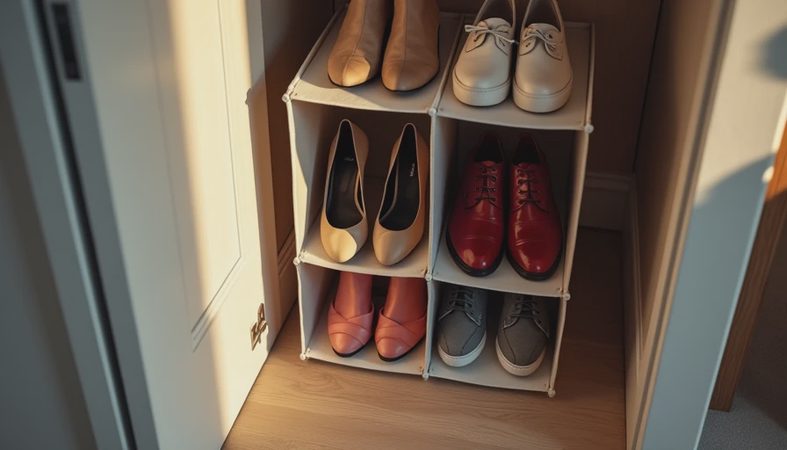
For shoes, use adjustable shelves with at least 10 to 12 inches of clear height for boots and taller sneakers. Shorter shoes can use tighter spacing. A rotating shoe tower often looks efficient in a showroom but can consume valuable floor area and create awkward access. Fixed shelves are less dramatic and usually easier to repair, clean, and rearrange.

Plan Lighting, Outlets, and Daily Access
A closet can have excellent cabinetry and still fail at 6:15 AM if the lighting is poor. Use a ceiling fixture for general illumination, then add focused light near drawers or a full-length mirror. A color temperature around 3000K to 3500K is practical for clothing because it feels clear without making the room look harsh. Put switches near the entry, and do not let a new cabinet cover an outlet needed for a steamer or vacuum.
I once reviewed a shoe-wall plan where the only outlet sat directly behind the proposed built-in. Moving it after installation meant opening finished drywall. Mark every outlet and low-voltage line before cabinets arrive. If you use LED strip lighting, plan the transformer location and access panel in advance. Hidden electrical equipment still needs service access.
High-capacity wardrobe systems for seasonal rotation should also keep daily items between waist and eye level. Put handbags, frequently worn shoes, and current work clothes where you can reach them without a stool. Store travel luggage and occasional accessories higher or farther from the door. This division reduces the number of times you move an entire stack to retrieve one item.
Compare Custom, Modular, and Hybrid Approaches
A fully custom closet makes sense when the room has sloped ceilings, unusual corners, or expensive square footage. Custom cabinetry can also provide strong drawer construction, integrated lighting, and exact filler panels around doors. Expect the cost to rise quickly as you add paint-grade finishes, islands, specialty racks, and installation complexity.
Modular products from IKEA PAX, The Container Store, and similar systems can be effective when the walls are reasonably straight and the layout follows standard dimensions. They offer useful adjustability, but confirm the finished depth, anchoring method, and door clearance before ordering. A product drawing is not the same as a field measurement.
A hybrid plan is often the sensible answer. Use a contractor or cabinetmaker for a level, securely anchored base and add adjustable components inside. Spend money on drawer boxes, durable hardware, and lighting before paying for decorative end panels. High-capacity wardrobe systems for seasonal rotation perform best when their expensive parts solve a real access or durability problem.
A Practical Installation and Rotation Checklist
Before ordering, measure each wall in three places because older houses rarely have perfectly square corners. Confirm the tallest garment, widest hanger, largest shoe, and heaviest storage bin. Leave at least 3 inches between a cabinet edge and a door casing when swing clearance requires it. Check baseboard thickness, floor transitions, and heating vents.
During installation, anchor uprights into studs or use the manufacturer’s approved hardware for the wall type. Do not rely on drywall anchors for a heavily loaded hanging rail. Level the system before adjusting shelves; a small error at the base becomes obvious at the top. After installation, load the heaviest coats and bags first, then test doors and drawers at full extension.
For the twice-yearly rotation, remove one category at a time. Inspect for repairs, group donations separately, and clean empty shelves before loading the next season. High-capacity wardrobe systems for seasonal rotation stay useful when the changeover is a short maintenance task rather than an exhausting excavation.
The right design is not the one with the most compartments. It is the one that gives long garments enough height, keeps the aisle open, lights the actual work surfaces, and puts seasonal clothing within a reasonable reach. Measure first, spend where the structure matters, and let accessories follow the wardrobe you really own.




No comments yet — be the first to share a thought.