Shoe storage solutions IKEA can solve a real closet problem, but only if you start with measurements instead of a product photo. Shoes need usable depth, ventilation, clear walking space, and a location that matches how you get dressed. A narrow cabinet beside the door is useful for daily sneakers; it is not automatically the right answer for tall boots, dress shoes, or a collection of 60 pairs.
I have installed and reviewed enough closet systems to know where this goes wrong. Someone buys three attractive cabinets, discovers that the door swing blocks one, then stacks shoes on the floor beside the hamper. The fix is not more furniture. The fix is a layout drawn around the room's dimensions, door swing, baseboards, and actual wardrobe.
Measure the shoe zone before shopping
Start with the wall you intend to use. Record its total width, ceiling height, baseboard projection, outlet locations, and the distance from that wall to the opposite obstruction. A shoe cabinet that projects 10 inches into a 36-inch aisle leaves only 26 inches of passage, which is cramped when you are carrying laundry or opening a drawer. In a walk-in closet, I want about 36 inches of clear aisle space, and 42 inches is more comfortable where two people dress at once.
Measure the shoes as a group, not just one pair. Low sneakers and flats can fit shallow storage, while men's work boots, western boots, and high-top sneakers need more vertical clearance. Leave room for toe boxes; forcing footwear sideways can crease leather and makes retrieval irritating. Also check the door casing. A BISSA cabinet can look slim online, but a projecting baseboard or trim return can stop it from sitting flat against the wall.
Before buying shoe storage solutions IKEA products, mark the proposed footprint on the floor with painter's tape. Open the closet door fully. Pull out a nearby drawer. Stand in the taped area while reaching for a hanging garment. This ten-minute test catches more errors than an hour spent comparing finishes.
Choose the IKEA product for the job
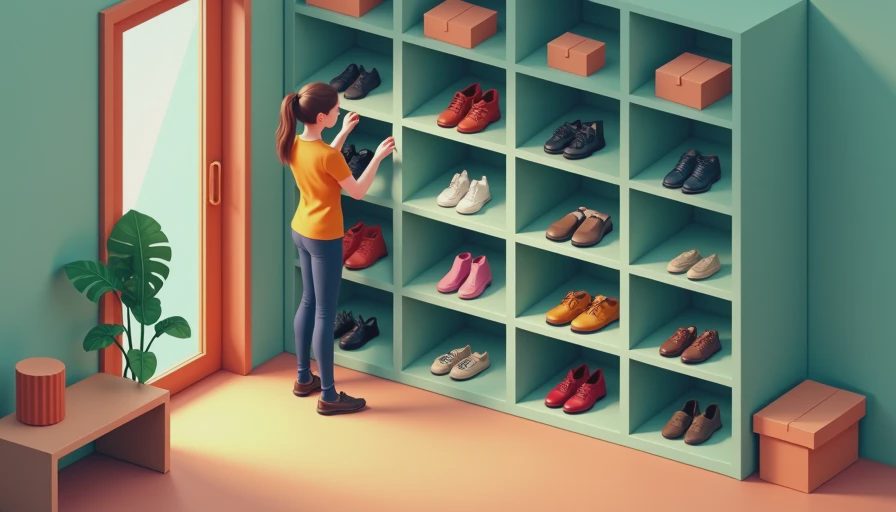
The BISSA shoe cabinet is useful when you need enclosed storage near an entry or along a shallow wall. Its flip-down compartments keep footwear visually contained, but its capacity is best for everyday shoes rather than bulky boots. Do not assume the advertised pair count will match your collection. Wide shoes, size 11 or larger footwear, and shoes with thick soles reduce practical capacity.
TRONES is even shallower and works well where every inch matters. It can hold lightweight everyday footwear near a bedroom door, mudroom, or narrow dressing area. Its limitations are clear: it does not provide the same support as a full-depth shelf, and it is not where I would put heavy boots or delicate heels without checking the fit first. Mounting must also be secure and level, especially when several units are stacked.
PAX is the better route when the shoe wall is part of a larger wardrobe system. Adjustable shelves let you create short bays for flats and taller bays for boots. The standard frame depth is much deeper than a dedicated shallow cabinet, so confirm that the room can handle it without stealing your aisle. This is where shoe storage solutions IKEA becomes a planning exercise rather than a shopping list.
Build the layout around your routine
Put the shoes you wear five days a week between knee and waist height. That sounds obvious, but many closets waste their easiest reach zone on decorative boxes. Reserve the lowest shelf for heavy boots, occasional shoes, or storage bins. Put formal shoes higher only if you can reach them safely without balancing on a chair.
For a compact reach-in closet, a shallow cabinet on the side wall often beats a full shelving tower across the back. For a walk-in closet, adjustable shelves along one long wall are more flexible, provided the opposing hanging section does not reduce the aisle below a practical width. If you have a bedroom closet with a hinged door, measure the door's sweep before placing storage behind it. A cabinet that is technically inside the closet can still be unusable when the door is open.
In Oklahoma City homes, I also plan for seasonal rotation. Heavy boots and snow-capable footwear do not need prime real estate during a hot July. Use labeled boxes on the highest shelf only for shoes that are clean and completely dry. An enclosed cabinet is not a substitute for ventilation after rain or wet grass.
Make shoe storage solutions IKEA look built in
The difference between a temporary pile and a finished wall usually comes from installation details. Remove or notch the baseboard only when you understand what is behind it, and use a filler strip to close an awkward gap at the side. Anchor tall units to wall studs or use the manufacturer-approved hardware for your wall type. Do not rely on weight alone to keep a narrow cabinet stable.
A continuous top can visually connect several separate cabinets, but it must not prevent doors or flip compartments from opening. I have seen homeowners add a beautiful wood top and discover that the front edge collides with the compartment doors. Test the complete movement first, then install trim. If you are adding a seat, keep it outside the main aisle and allow enough knee clearance to sit without blocking the closet entrance.
Lighting deserves attention too. A ceiling fixture behind your body can cast a shadow directly onto the shoe wall. An LED strip under a shelf or a wall-mounted fixture aimed toward the footwear makes color matching easier. If an electrician is already opening the wall, place outlets where they will remain accessible rather than burying one behind a cabinet.
When to skip IKEA shoe furniture
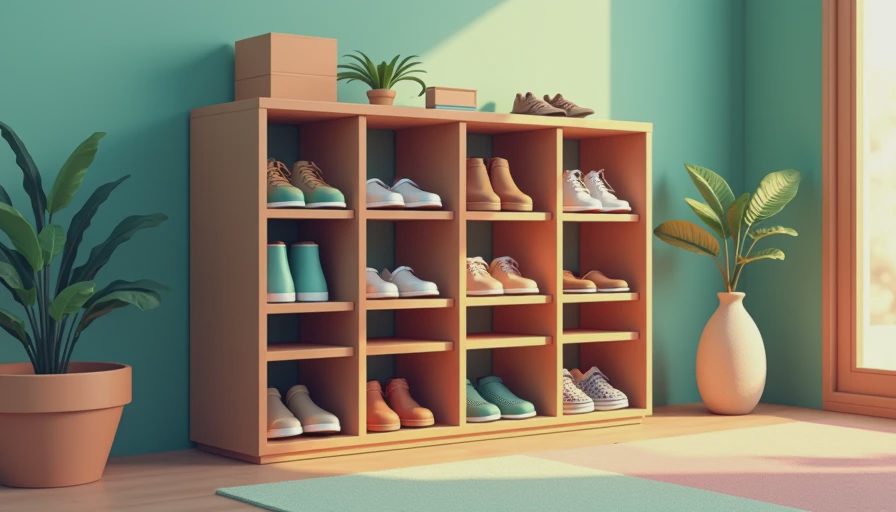
There are rooms where shoe storage solutions IKEA are the wrong tool. If you need fully custom widths around a window, sloped ceiling, radiator, or uneven plaster wall, a built-in shelf may use the space better. The same applies when your collection includes many tall boots, riding boots, or display-quality heels. A standard cabinet can force compromises that a simple adjustable shelf would avoid.
I also skip enclosed flip-door cabinets for a household that regularly stores wet footwear. Open wire or ventilated shelves are safer for drying, followed by enclosed storage once the shoes are clean and dry. In a garage or mudroom, account for dirt, salt, and moisture before bringing white or porous finishes into the plan. A washable mat and a drip tray solve more than another cabinet does.
Budget matters, but so does replacement cost. A low-cost cabinet that fails after repeated overloading is not a bargain if it damages shoes or has to be rebuilt. Use the inexpensive product where its construction fits the job, and spend more on anchors, shelf supports, and lighting when those are the parts doing real work.
A practical buying sequence
Take inventory first. Count everyday pairs, seasonal pairs, boots, and special-occasion shoes. Measure the three largest pairs and the tallest boot. Then draw the wall elevation on graph paper, including trim and outlets. Mark a 36-inch aisle where applicable, and subtract the actual depth of every cabinet or frame.
Next, test one unit before buying several. Put it in the room, load it with your real shoes, and open the closet door. Confirm that the compartments do not catch on trim and that you can remove a pair without moving three others. This is especially important with shoe storage solutions IKEA because online dimensions do not show the clutter created by bulky footwear.
Finally, price the complete installation: cabinets, shelves, anchors, fillers, trim, lighting, boxes, and any delivery charge. A collection of inexpensive units can quickly approach the cost of a better-planned system. If the layout passes the tape test and the storage matches your routine, IKEA can be a sensible starting point. If it fails those tests, no attractive product photo will rescue the closet.

No comments yet — be the first to share a thought.