The entryway is where good intentions go to die. Shoes land beside the door, then spread toward the stairs, the kitchen, and eventually the room where you trip over them. The best shoe storage solutions for entryway spaces start with the architecture of the area, not a pretty basket you saw online. Measure the door swing, identify the traffic path, and decide how many pairs your household actually wears in a normal week.
I have installed enough entryway storage to know that the wrong depth causes more trouble than the wrong color. A cabinet that projects 18 inches into a narrow hall can turn an ordinary door opening into an obstacle course. A bench with no clearance underneath becomes another surface for shoes. Plan for access first, then choose the finish.
Start With the Entryway Measurements
Measure from the face of the closed door to the opposite wall, then open the door fully and measure again. You need a clear walking path of about 36 inches, and 42 inches feels substantially better when two people use the space at once. In a compact hall, keep shoe furniture between 10 and 14 inches deep. Anything deeper deserves a careful test with the door, trim, and nearby furniture in place.
Height matters, too. A low bench usually sits around 17 to 19 inches high, which is comfortable for putting on boots. If you add a coat hook rail above it, leave at least 36 inches between the seat and the hooks so jackets do not bunch against the cushion. For tall cabinets, check the baseboard and outlet locations before ordering. I once saw a homeowner install a narrow shoe tower directly over an outlet needed for a vacuum; the cabinet had to be cut apart and moved.
For renters or anyone testing a layout, painter's tape is more useful than a rendering. Tape the proposed cabinet footprint on the floor for two days. Walk around it carrying groceries, open the door, and watch where the household naturally drops shoes. That evidence beats guessing.

Choose the Storage Type Based on Your Shoes
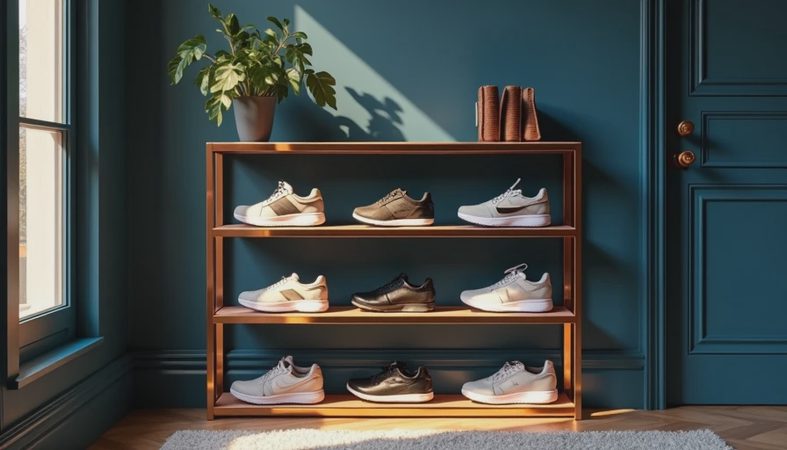
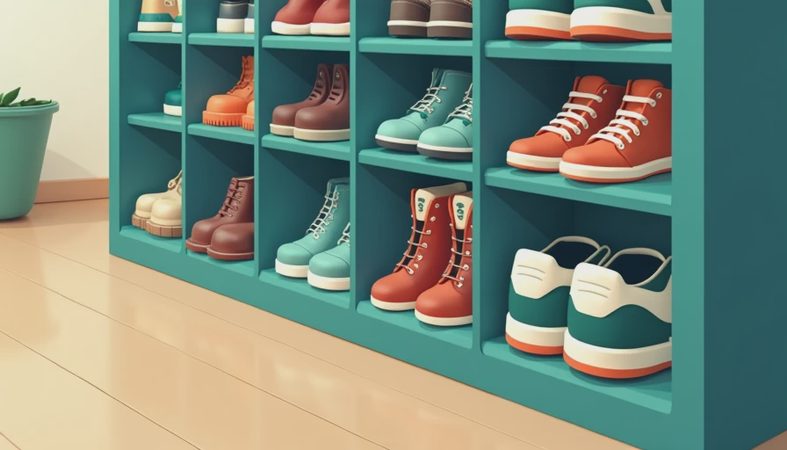
Open shelving is inexpensive, easy to ventilate, and fast to use. It works well for everyday sneakers, sandals, and muddy yard shoes. A three-tier metal rack from brands such as Seville Classics or Whitmor can cost roughly $30 to $80, while a sturdier wood unit may run $120 to $300. The weakness is visual noise. If every pair remains visible, the entryway can look untidy even when the floor is technically clear.
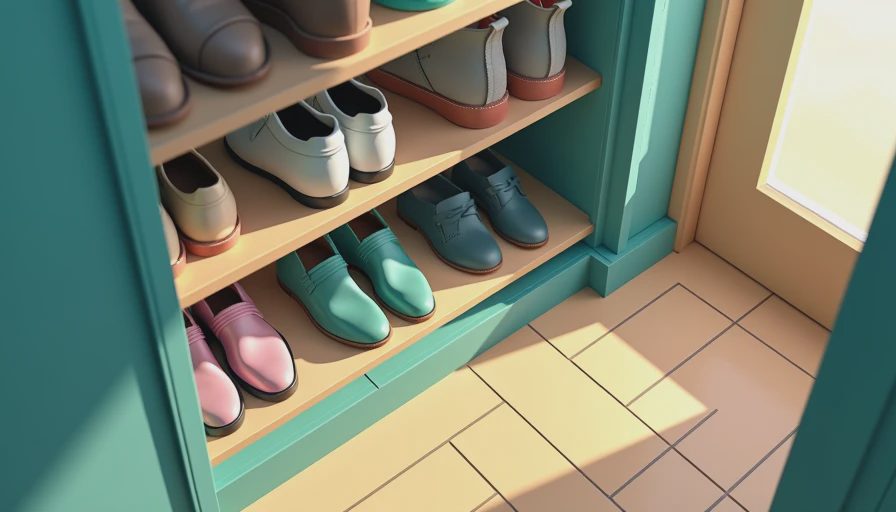
Closed cabinets give a cleaner face, but ventilation and shelf height become important. Look for adjustable shelves and doors that do not collide with the main entry door. IKEA's Bissa and Hemnes lines are common budget references, while more substantial options from The Container Store or built-in closet companies cost more but can be sized precisely. Allow about 7 inches of vertical space for flats and sneakers, 9 to 11 inches for ankle boots, and at least 14 inches for taller boots.
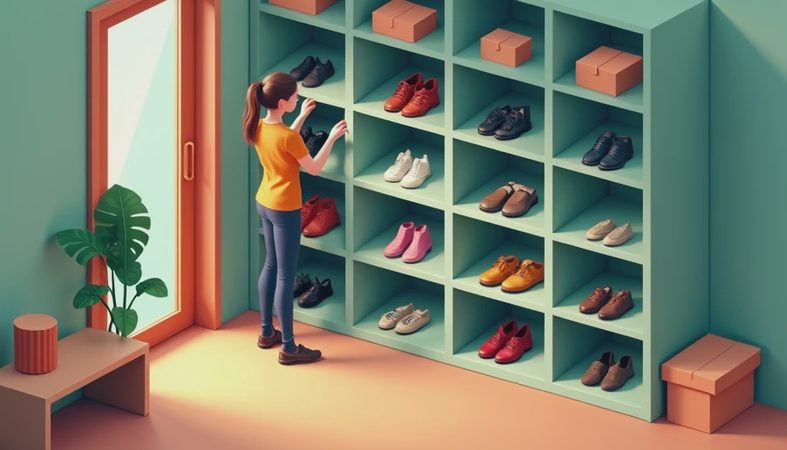
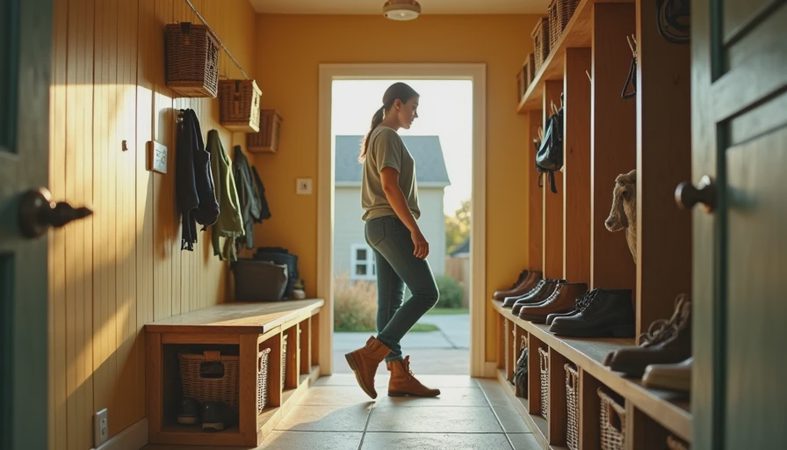
A bench with cubbies is useful when the entryway has enough depth. The cubbies should be wide enough for actual pairs, not just one narrow shoe placed sideways. For a family, aim for 12 to 15 inches of width per section. Add a washable tray below the rack if Oklahoma red dirt, wet grass, or winter salt is part of your routine. The tray protects the floor and gives wet footwear somewhere deliberate to land.
Shoe Storage Solutions for Entryway Corners and Small Halls
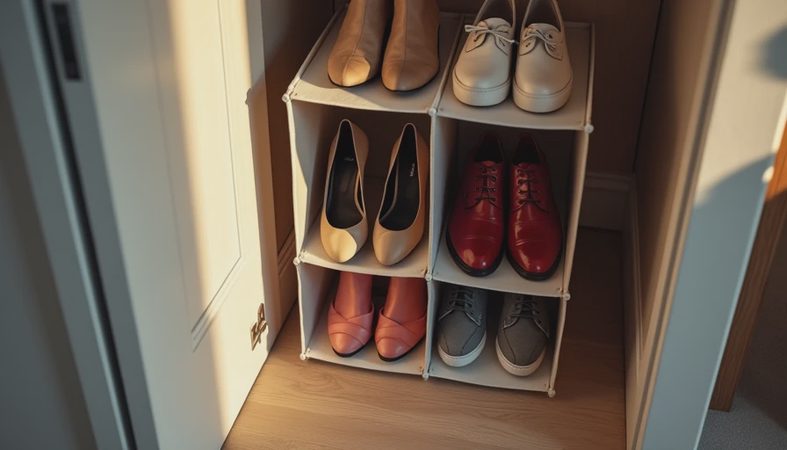
Small spaces need vertical thinking, but do not confuse tall with useful. A slim tilt-out cabinet can hold several pairs while projecting only about 9 to 12 inches, making it a strong choice beside a door. Measure the cabinet's open-door clearance; some models need more room than their closed dimensions suggest. A wall-mounted shoe cabinet also keeps the floor clear for sweeping and makes a narrow hall feel less crowded.
If the entryway has an unused corner, consider an L-shaped arrangement with a short bench and shallow shelving. Keep the bench on the wall with the most comfortable approach, not automatically beneath the coat hooks. A 24-inch bench can be enough for one person, but 36 to 48 inches works better for a couple or parent helping a child with boots.
Hooks, baskets, and shoe storage should function as one system. Put frequently worn pairs at knee or floor level, seasonal footwear higher up, and rarely used dress shoes somewhere else entirely. If you store every shoe by the front door, the entryway becomes a closet without the closet's organization. In my own house, summer sandals get one open basket while winter boots move to a utility area when Oklahoma heat arrives.
Materials, Cleaning, and the Floor Beneath Them
Entryway storage takes more abuse than bedroom furniture. Painted MDF is practical for a dry interior, but exposed particleboard edges do poorly when wet shoes sit against them. Powder-coated metal is easy to wipe and tolerates damp footwear, though it can look more utilitarian. Solid wood is repairable and attractive, but it needs a durable finish and still should not be treated as a boot tray.
Use a washable mat in front of the storage, not just underneath it. A runner that extends 24 to 36 inches into the room catches grit before it reaches hardwood. For tile or luxury vinyl, add felt pads under freestanding furniture so cleaning does not leave scratches. Avoid thick shag rugs near open shoe racks; they trap dirt and make it difficult to pull out a basket.
A client once insisted on a pale upholstered bench because it looked lighter in the room. The entryway also served as the path from the garage. Within weeks, the fabric showed dark marks from work shoes. We replaced the cushion with a removable, tightly woven cover and added a hard shelf below. The lesson was not to avoid upholstery; it was to specify something that can be cleaned without dismantling the furniture.
A Practical Buying Checklist
Before purchasing, write down the number of pairs that need daily access. Count boots separately because their height changes the design. Then check these details in order:
- Confirm the available depth with the door open and closed.
- Mark a 36-inch minimum walking path on the floor.
- Measure baseboards, outlets, registers, and wall trim.
- Compare shelf heights with your tallest everyday shoes.
- Check whether doors, drawers, or tilt fronts need extra clearance.
- Select a tray or washable surface for wet footwear.
- Anchor tall furniture to wall studs or use appropriate wall hardware.
- Leave overflow space for guests instead of filling every inch.
That last point prevents the familiar failure where residents own a perfect storage unit but still leave shoes beside it. Storage works when the easiest action is also the intended action.
Make the Setup Easy to Maintain
The most effective shoe storage solutions for entryway areas are not necessarily the largest. They create a short path between taking off shoes and putting them away. Labeling can help in a busy household, but simple divisions such as everyday, outdoor, and dress shoes are usually enough. Reserve one section for guests or temporary pairs so visitors do not have to guess.
Review the setup at the change of each season. Move sandals out when boots become the daily choice, and remove shoes nobody has worn in months. A $150 rack that holds the right 12 pairs will perform better than a $500 cabinet packed with 30 pairs nobody can reach. If your entryway is narrow, choose a shallow closed cabinet. If it is wide, a bench and open cubbies may provide more useful seating and access.
Good shoe storage solutions for entryway spaces respect the room's dimensions, the floor's maintenance needs, and the habits of the people using it. Measure first, protect the walking path, and buy for real footwear rather than an imaginary minimalist household. The result will not just look organized at 8 a.m.; it will still work when everyone is late.
No comments yet — be the first to share a thought.