The floor beside your mudroom door is not a storage system. It is a pile waiting for somebody to trip over it at 6:15 AM. Good mudroom shoe storage solutions start with the room's traffic pattern, not with a pretty basket from a catalog. You need to know which door people use, where wet shoes land, and how much floor area must remain clear when two people are leaving at once.
I design storage by working backward from the mess. In an Oklahoma City house, that means muddy spring sneakers, summer sandals, winter boots, and the occasional pair of cleats arriving together. A single shelf rarely handles all four. Before buying cabinets, measure the wall, the door swing, and the distance from the door casing to the nearest obstruction. Those three numbers determine whether you need a bench, a tall cabinet, or shallow open shelving.
Start with the mudroom's actual dimensions
A functional shoe zone needs at least 12 inches of shelf depth for adult shoes, but 14 to 16 inches is safer for running shoes, work boots, and shoes with bulky soles. If you are storing tall boots upright, reserve 18 inches of vertical clearance or more. Do not design from the size of one ballet flat and assume the rest of the household will cooperate.
The walking path matters more than the cabinet width. Keep 36 inches of clear aisle in front of storage as a minimum. If the mudroom connects the garage to the kitchen, I prefer 42 inches because grocery bags, backpacks, and dogs tend to occupy the same lane. A bench can be 16 to 18 inches deep and approximately 18 inches high, which is comfortable for pulling on shoes without turning the passage into a hallway obstacle.
Check the door swing before you draw anything permanent. I once reviewed a renovation where a six-foot shoe cabinet looked perfect on paper, but the door opened directly into its drawers. The homeowners had paid for excellent storage they could not fully open. Mark the door arc on the floor with painter's tape. Then place cardboard boxes at the proposed cabinet depth and walk through with a laundry basket.
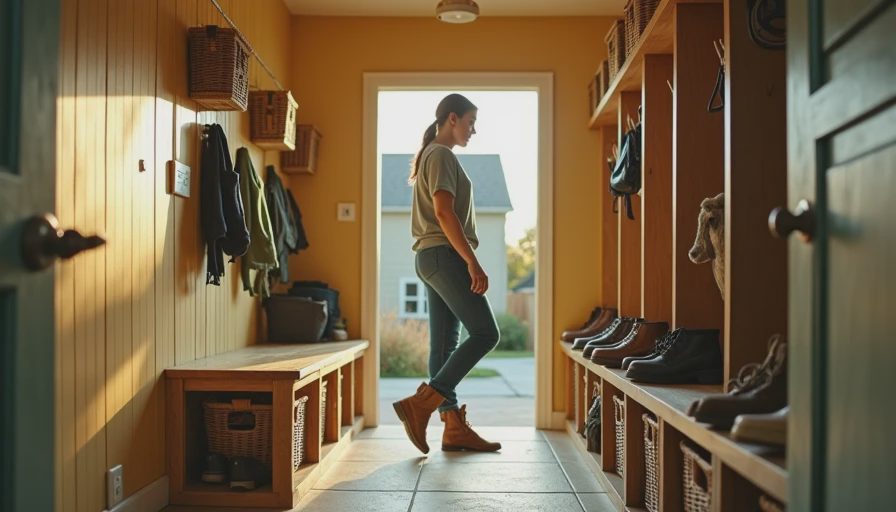
Choose materials for wet, dirty footwear
Mudroom shoe storage solutions should be built from materials that tolerate grit and moisture. Melamine is practical for cabinet interiors because it wipes clean and does not require a delicate finish. Painted plywood edges can work well, but exposed raw particleboard near a garage entry will swell after repeated contact with wet boots. If you use wood shelving, seal every edge, not just the visible top.
For the floor below the shoes, porcelain tile, luxury vinyl plank, or sealed concrete is easier to maintain than carpet. I am not against a washable runner, but it should sit on a floor that can handle water underneath. Use a removable rubber boot tray for snowy or muddy footwear. A tray approximately 24 by 15 inches handles two pairs of adult shoes; a household with children may need two trays rather than one oversized tray that becomes impossible to lift and clean.
Ventilation is another detail people skip. Closed cabinets trap dampness and odor, especially when someone puts away shoes before they are dry. Open cubbies or doors with ventilation panels solve part of the problem. Leave a little air space around boots, and do not pack every shelf to its front edge. A cabinet that looks orderly on installation day can become a dark, damp box by October.
Match the storage type to the shoes
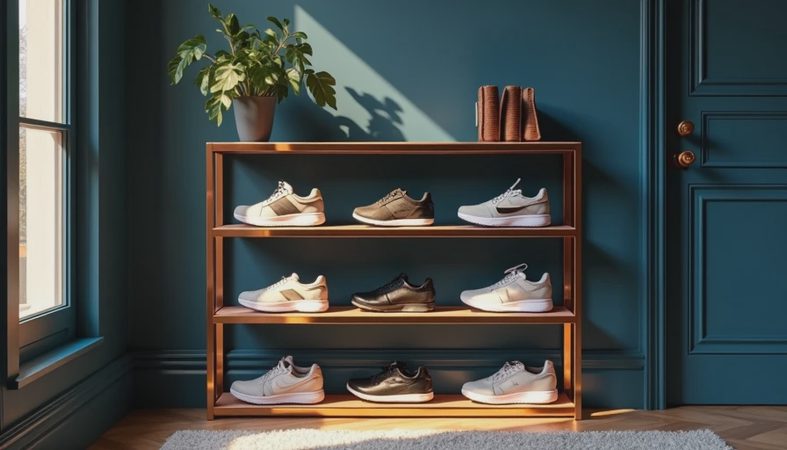
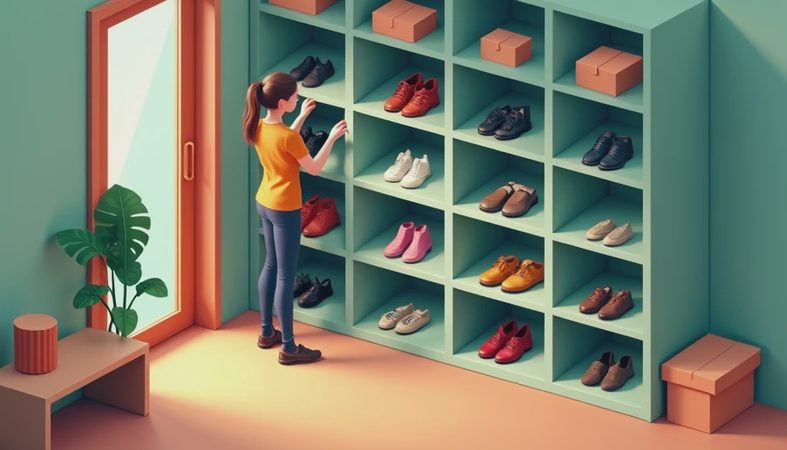
Open shelves are the fastest option for everyday shoes. Set the lowest shelf 4 to 6 inches above the floor so it can be swept underneath, and use adjustable pins so the spacing can change with the seasons. Low shelves work for sneakers and sandals, while taller compartments handle ankle boots. Avoid one fixed row of identical cubbies unless every pair in the house is the same height.
A bench with drawers gives you a useful place to sit and hides less attractive footwear. Drawers need enough depth for shoes to lie flat without pressing against the back. Full-extension slides are worth specifying because a drawer that opens only three-quarters of the way turns the back third into a black hole. For a lower-cost version, use lift-up bench storage, but include a soft-close hinge and a stop so the lid does not slam against the wall.
Tall cabinets make sense when the mudroom is narrow. Put frequently worn shoes between knee and waist height, not at the very bottom. Reserve the top for seasonal boots or rarely used formal shoes. If you have children, one low shelf per child is more useful than a beautiful adult-height cabinet. The storage has to work for the person putting shoes away, not only for the person who specified it.
Make the entry handle daily traffic
The best mudroom shoe storage solutions separate clean storage from dirty arrival space. Put the boot tray closest to the exterior door, then place the bench beside it, followed by shelves or drawers. That sequence lets someone step inside, remove wet footwear, sit down, and move the shoes into their assigned spot without crossing the room.
Add hooks above the bench, but do not let coats hang so low that they brush the shoes. A hook rail mounted about 60 to 66 inches above the floor suits many adults, while a second lower row can serve children. Keep backpacks off the shoe shelves; they shed dirt, block access, and usually end up on the floor anyway. A narrow vertical compartment for bags is often more valuable than another row of tiny shoe cubbies.
Lighting belongs in the plan before the cabinets are installed. One ceiling fixture can leave the shoe floor in shadow. Recessed lights or a wall fixture near the bench make it easier to find a matching pair. If you are renovating, put an outlet near the bench for a cordless vacuum charger, not behind a fixed cabinet where it becomes useless. I have seen homeowners spend more on custom shelving than on the electrical work that would have made the room easier to maintain.

Use a layout that fits the budget
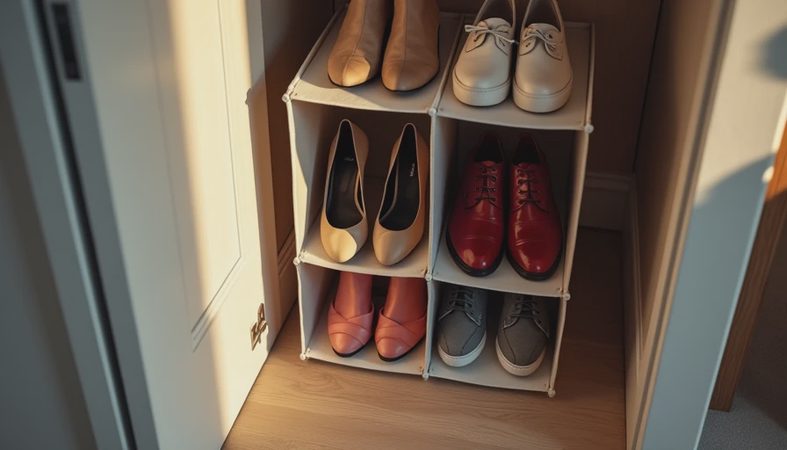
A small reach-in mudroom does not need a full custom wall. Start with a durable bench, two adjustable shelves, and hooks mounted into solid blocking. This can create a reliable landing zone without sacrificing the entire passage. Add a freestanding metal boot rack if you need temporary capacity during winter, then remove it in warmer months. The goal is controlled flexibility, not filling every inch immediately.
For a medium room, combine a 48- to 72-inch bench with drawers below and closed cabinets above. Stock modular units from retailers such as IKEA or The Container Store can work when their dimensions fit the wall, but inspect the back panels, hardware, and anchoring method. A unit designed for a bedroom may not tolerate wet boots, garage grit, or daily slamming. Upgrade the drawer slides and secure tall pieces to studs.
Custom work earns its cost when the room has awkward corners, uneven walls, or a family with very different footwear. It also makes sense when you need one cabinet to conceal a vacuum, sports equipment, and shoes. It does not earn its cost merely because a showroom offers a matching row of cubbies. Spend first on correct depth, durable edges, ventilation, and installation. Decorative trim can come later.
A practical installation checklist
Before ordering, record the wall width at the floor, bench height, and ceiling height. Measure again near the corners because older homes rarely have perfectly square walls. Locate studs and note electrical outlets, baseboard depth, heating vents, and any access panels. A cabinet should not cover a vent or require you to cut around a wiring box after delivery.
Decide which shoes are worn weekly and which are seasonal. Give the weekly group the easiest reach. Count pairs rather than estimating by household member; two adults with eight daily pairs each need a different solution from a family that stores sports shoes, rain boots, and work footwear in the same room. Leave roughly 15 to 20 percent spare capacity so the first shopping trip does not defeat the design.
Finally, test the layout with inexpensive boxes before installation. Place them at the proposed depth, open the door, sit on the bench, and carry a grocery bag through the aisle. If the arrangement feels tight with cardboard, finished cabinets will not improve it. The most successful mudroom shoe storage solutions are not the ones with the most compartments. They are the ones that make the correct action easier than dropping shoes on the floor.


No comments yet — be the first to share a thought.