Most shoe storage solutions for closet spaces fail before the first pair goes on the shelf. The problem is usually not a lack of baskets or a shortage of clever products. It is a bad plan: shelves that are too shallow for boots, an aisle narrowed by a shoe tower, or a door swing that collides with the pair you wear every day. Start with the room's bones, then choose the storage.
In my closet installations around Oklahoma City, I measure footwear before I draw the cabinet layout. A client's actual wardrobe might include eight pairs of sneakers, two pairs of tall boots, dress shoes, sandals, and several pairs that need to stay in their boxes. Those categories require different depths and clearances. One universal shelf rarely handles all of them well.
Measure the Closet Before Buying Anything
Begin with the finished wall-to-wall dimensions, not the builder's rough measurements. Mark the door swing, trim, windows, outlets, vents, and any access panels. If a shoe cabinet is going on a wall, locate the studs before ordering a tall unit. A loaded cabinet can be surprisingly heavy, and drywall anchors are not a substitute for proper fastening.
For comfortable movement, keep at least 36 inches of clear aisle space. Forty-two inches is better when two people use the closet or when drawers open into the walkway. A shoe shelf that projects 14 inches from the wall may look modest on paper, but it takes space away from your knees and from an open drawer across the aisle.
Also check lighting before installation. I once reviewed a shoe wall where the owner had specified every shelf but forgotten the electrical outlet behind it. The result was a dark lower section and an extension cord running around the cabinet. Plan an outlet and a lighting path before the back panel is installed.
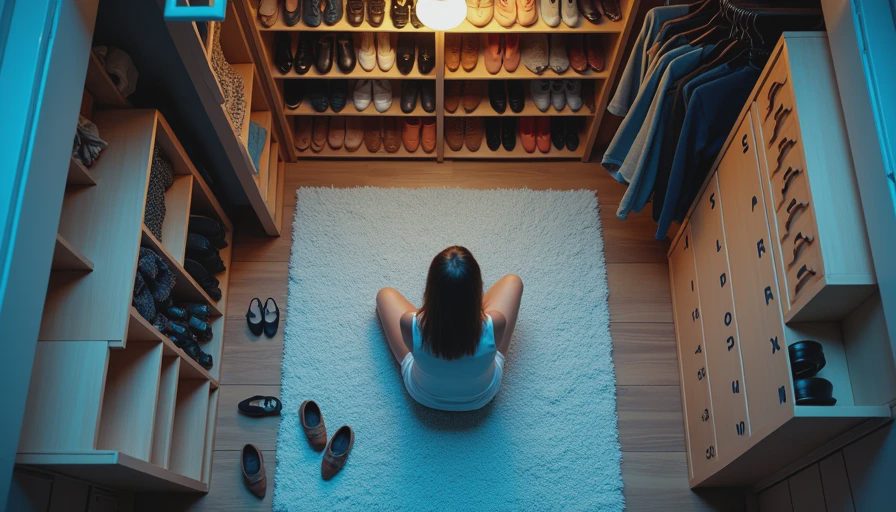
Choose Shelf Depth for the Shoes You Own
Standard shoe shelves often land between 10 and 14 inches deep. That range works for most low-profile footwear, but measure your largest pair. Men's size 12 sneakers, platform shoes, and pointed boots can need more than a narrow shelf provides. Letting the toes hang over the edge is not a storage strategy; it creates a trip hazard and damages the uppers.
For everyday shoes, a 12-inch shelf is a practical starting point. Use 14 to 16 inches for larger footwear, boxes, or a row of boots. Tall boots need vertical clearance, usually 16 to 20 inches depending on the shaft. Do not divide a full-height cabinet into equal openings just because equal openings look tidy. A 6-inch opening is useful for sandals and flats but wastes space when your winter boots need to lie sideways.
Adjustable pin shelves are worth the small upgrade. They let you change the layout after a season of use, which matters in Oklahoma City's hot summers and colder winter months. A fixed shelf can force you to live with an installation mistake for years.
Build Shoe Storage Around Traffic Patterns
The best shoe storage solutions for closet spaces put frequently worn pairs near the entrance, not at the far end behind formal clothing. Create a landing zone between the door and the main hanging area. A two- or three-shelf unit near the entrance can hold sneakers, house shoes, and the pair used for errands. Less-used dress shoes can go higher or farther back.
A low cabinet, roughly 30 to 36 inches high, can work beneath double-hang clothing. It keeps shoes visible without creating a tall obstacle. Add a durable top for a small tray, but do not turn that surface into a permanent pile of receipts, bags, and keys. If clutter collects there, the cabinet is functioning as an unplanned counter rather than a shoe station.
For a narrow reach-in closet, use the back of the door only if the hinges and clearance allow it. Over-the-door racks are inexpensive, but loaded pockets can make the door sag or hit the opposite shelving. Measure the full swing with shoes installed, not just the empty door.
Compare Freestanding, Built-In, and Pull-Out Options
Freestanding bookcases are the cheapest test. A basic unit from IKEA, Target, or a local home store can cost roughly $60 to $200, depending on width and material. Use one to prove where shoes should live before committing to cabinetry. Secure it to the wall, especially in a household with children or pets.
Built-in shelves cost more, commonly several hundred dollars for a small section and much more when integrated into a full closet system. The advantage is efficient use of odd corners, consistent dimensions, and a finished face that does not leave dead space beside the wall. California Closets, The Container Store's Elfa systems, and custom local shops all approach this differently, so compare the actual shelf depth and installation details rather than the showroom color.
Pull-out racks can solve deep-cabinet access, but they are not automatically better. Hardware adds cost, and a narrow pull-out may hold fewer pairs than a stationary shelf. Use pull-outs where reaching the back is genuinely difficult, such as a 24-inch-deep cabinet. For a 12-inch shelf, a fixed surface is simpler and usually more reliable.

Keep Boots, Boxes, and Delicate Shoes From Fighting for Space
Shoe storage solutions for closet areas should separate bulky footwear from everyday pairs. Tall boots need open vertical bays or removable shelves. Store them upright with boot shapers if the shaft collapses, but avoid forcing a rigid insert into soft leather. Allow wet shoes to dry outside the cabinet before storing them; trapped moisture can damage both shoes and shelving.
Boxes are useful for delicate materials and special-occasion shoes, but they make inventory invisible. If you keep the original boxes, label the front with a simple description or photograph. Clear plastic boxes improve visibility, although a full set can cost $2 to $8 per box and takes more vertical room than a bare shelf. Do not buy 30 boxes before confirming the cabinet dimensions.
For heels, use a shelf with enough height to prevent the heel from catching the shelf above. Flats can share lower openings, while sneakers tolerate tighter spacing. A small tray can contain sandals and slippers, but use a washable tray rather than fabric that absorbs dust and odor.
Finish the Installation for Daily Use
The final shoe storage solutions for closet spaces should be easy to clean and easy to see. Melamine is practical because it wipes down quickly and is widely available in closet systems. Painted wood looks warmer but needs careful edge treatment, particularly where dirty soles touch the surface. Wire shelving improves airflow but can leave narrow heels unstable unless you add a solid liner.
Lighting belongs in the budget. A plug-in LED strip or motion-activated puck light can cost about $20 to $80 for a small section, while integrated lighting costs more but looks cleaner. Place light toward the front edge of the shelf so the upper pair does not cast a shadow over the lower one. Warm or neutral white light makes black and navy shoes easier to distinguish than dim yellow bulbs.
Leave a little spare capacity. A cabinet filled to every inch is difficult to maintain, and new shoes will not magically stop entering the house. Keep at least one open section for seasonal rotation or a future purchase. If you need to add a second tower later, the wall and aisle should already have the space for it.
When choosing shoe storage solutions for closet spaces, spend first on accurate measurements, strong attachment, useful shelf depth, and lighting. Decorative labels and matching containers come later. A storage wall that works at 6:15 AM, holds your largest shoes, and leaves a clear 36-inch aisle is a better investment than an impressive cabinet that blocks the door. Measure the footwear, draw the traffic path, and install only what the room can actually support.
No comments yet — be the first to share a thought.