The best shoe storage solutions begin with the closet's structure, not a shopping cart. Before you order a rotating rack or a wall of clear boxes, measure the door swing, locate studs, and decide whether shoes belong near the entry or under hanging clothes. A shoe collection is heavy, awkwardly shaped, and used every morning. Treating it as an afterthought is how you end up with pairs blocking the aisle.
In my closet projects, I start by counting real pairs, including boots, house shoes, sneakers, and the sandals that appear every summer. Then I plan for about 10 percent more capacity. If you own 36 pairs, build for 40. The best shoe storage solutions are the ones that let you see and reach that inventory without moving six other pairs first.
Start with dimensions, not accessories
A standard shoe shelf is usually 12 to 14 inches deep. That fits most women’s shoes, low-profile men’s shoes, and sneakers without wasting too much floor area. Tall boots need more attention: allow at least 16 inches of vertical clearance, and measure your tallest pair with the shaft standing naturally. An ankle boot may need 10 inches; a knee-high boot can require 18 inches or more.
Shelf width determines how many pairs fit. A 24-inch shelf typically holds three or four pairs, depending on toe shape. A 36-inch shelf handles roughly five pairs. Do not fill every inch. Leave enough room to pull a pair forward, especially if the shelf is above waist height.
Keep a main closet aisle at least 36 inches wide. If a shoe cabinet or pull-out rack faces another storage wall, 42 inches is more comfortable. I have seen beautiful layouts fail because a homeowner gained six inches of shoe capacity and lost the ability to open a drawer fully. The best shoe storage solutions preserve circulation first.
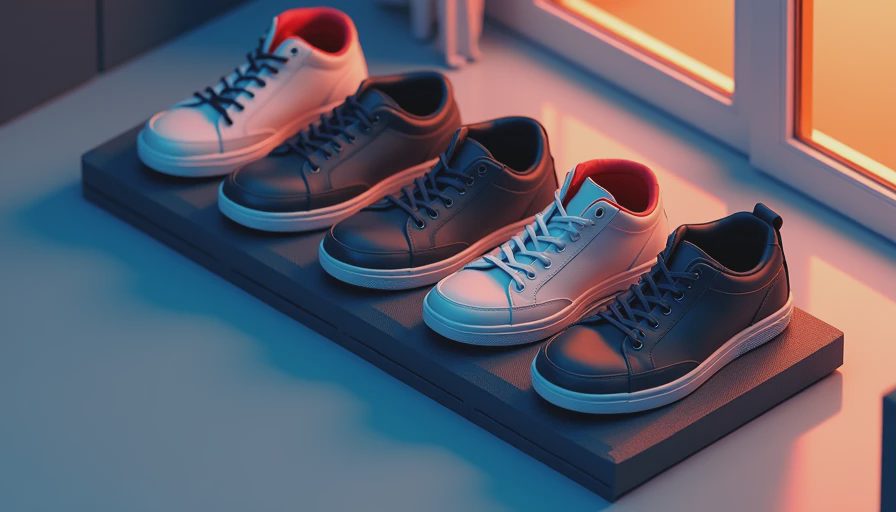
Open shelves are the reliable workhorse
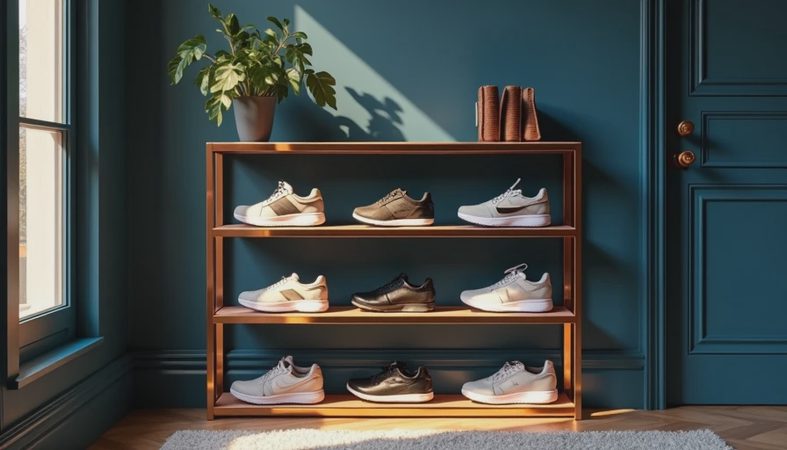
Open adjustable shelves are my default recommendation for a walk-in closet. They are easy to specify, simple to clean, and honest about what you own. A melamine shelf system from Elfa, ClosetMaid, or a custom closet company can usually be configured around your actual collection. Expect basic modular components to cost roughly $150 to $600 for a modest shoe section, while custom built-ins can run $1,000 to $3,000 or more.
Set everyday shoes between knee and hip height. Reserve the floor for boots and occasional pairs, not the shoes you wear to work every day. A slightly sloped shelf can improve visibility, but it is not essential. Flat shelves are more flexible and prevent heels from sliding toward the edge.
Add a thin front lip if shelves are angled or installed in a high-traffic location. For athletic shoes and casual pairs, spacing of 7 to 8 inches works well. Heels need more vertical room because the heel and toe occupy different planes. Use shelf pins rather than permanently fixed shelves so the layout can change when your wardrobe changes.
Drawers and cabinets solve visual clutter
Closed storage is useful when your shoes are dusty, brightly colored, or packed into a bedroom closet that needs to look calm. Full-extension drawers let you see several pairs from above and avoid kneeling on the floor. A drawer around 24 to 30 inches wide is practical; wider drawers become heavy when filled with shoes and may require more expensive hardware.
Tilt-out shoe cabinets can work in a narrow entry zone, but many inexpensive versions are too shallow for larger sneakers or boots. Measure the interior, not the advertised cabinet depth. The best shoe storage solutions in a compact closet often combine a shallow cabinet for flats and sandals with open shelves for boots and sneakers.
Do not install cabinet doors where they collide with the closet door or a dresser. Mark the swing on the floor with painter’s tape before ordering. This five-minute test catches an expensive mistake. Cabinet fronts typically add several hundred dollars to a modular project and substantially more when matched to custom doors.
Pull-outs, towers, and vertical storage
Pull-out shoe racks make deep spaces usable. They are especially effective beside a hanging section, where a fixed shelf would force you to reach behind the front row. Choose metal slides rated for the loaded weight, not just the empty rack. A packed pull-out can be surprisingly heavy.
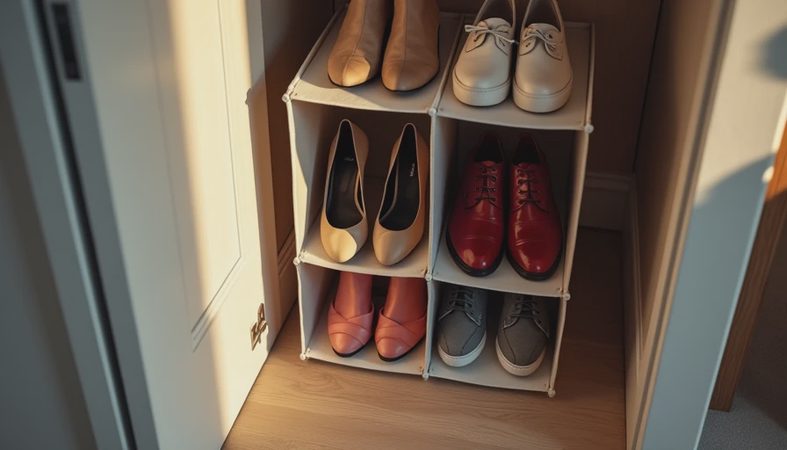
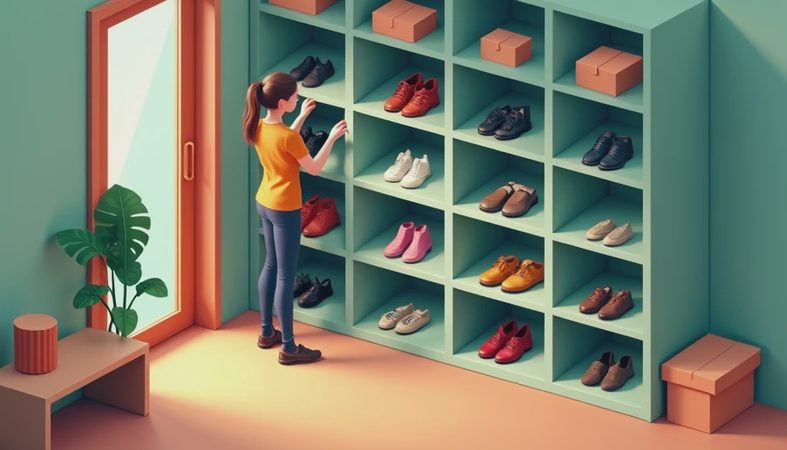
A vertical shoe tower is useful when floor area is limited. Plan each cubby around the shoes it will hold instead of making every opening identical. Six-inch openings suit flats and sandals, while 8 to 10 inches accommodate sneakers. Reserve at least one taller opening for boots. A tower 12 to 16 inches wide can hold substantial capacity without consuming the full wall.
The best shoe storage solutions use vertical height only when access remains reasonable. If you need a step stool every morning, the storage is in the wrong place. Put seasonal or formal shoes up high, and keep daily pairs between waist and eye level.

Materials, ventilation, and the Oklahoma test
Shoes bring dirt, moisture, and odor into a closet. Wire shelving improves airflow and costs less, but small heels can tip through the gaps. Melamine gives a cleaner surface and prevents narrow heels from falling, though it should be wiped down rather than soaked. Avoid untreated wood directly under damp boots; it can stain and hold odor.
For a pair that comes in wet after a storm, use a removable boot tray near the closet entrance. Do not place damp footwear in a sealed cabinet. Let it dry fully first, particularly leather boots and athletic shoes. In Oklahoma City, summer humidity and winter mud both make ventilation more useful than a decorative door.
Lighting matters as much as the shelving. A ceiling fixture alone can cast a shadow over the lower shelves. Add a switched LED strip under a shoe tower or inside a cabinet, and plan the outlet before drywall closes. One client had a perfect shoe wall drawn on paper, then discovered the only electrical outlet sat directly behind the middle cabinet. We had to revise the section before installation.
A practical buying sequence
Use this order before spending money on the best shoe storage solutions for your room:
- Count pairs by category and measure the tallest boots.
- Photograph the closet empty, including the door and baseboards.
- Mark studs and note outlets, vents, switches, and trim thickness.
- Protect a 36-inch minimum aisle, or 42 inches where opposing drawers open.
- Assign daily shoes to reachable shelves and seasonal pairs to higher storage.
- Choose adjustable shelves first, then add drawers, doors, or pull-outs where they solve a specific problem.
- Test one sample bin or shelf before ordering an entire wall.
A $30 measuring error can become a $500 return, while a poorly planned custom cabinet may be impossible to revise. Brands such as IKEA, Elfa, The Container Store, and ClosetMaid offer useful starting points, but compare interior dimensions and hardware quality rather than relying on the product photo.
The best shoe storage solutions are not necessarily the most expensive. They fit the collection, respect the aisle, allow ventilation, and keep the pairs you wear most within one easy reach. Build around those facts, and your closet will still work after the showroom finish loses its novelty.

No comments yet — be the first to share a thought.