
For vacuum sealer clothes storage, use a vacuum storage bag made for textiles, not a food sealer. It's a practical way to shrink clean, completely dry seasonal cottons and synthetic clothing, but it's a poor home for leather, delicate embellishments, and anything that needs to retain loft. Before you start compressing, decide where the bags will live: a bulging stack in the middle of your closet floor is not a storage plan.
Start with the shelf, not the bag
The goal is to move off-season bulk out of valuable hanging and drawer space without making it impossible to retrieve. I would rather see one accessible upper shelf holding two labeled bags than a tower of compressed clothes wedged behind a door.
Measure the shelf's usable width and depth, including any space lost to a face frame, closet rod, or door hinge. Then measure the opening you have to pass the bag through. A compressed bag is flexible, but a tightly packed one doesn't bend around an awkward corner as easily as you might think.
For vacuum sealer clothes storage on a high shelf, choose several manageable bags instead of one enormous one. Leave enough clearance above the stack to get a hand around the top bag and slide it out. Don't block a light fixture or cover an outlet you need to reach. If the closet has an open wire shelf, put bags in a smooth-sided bin or on a shelf liner to reduce snagging.
The floor isn't my first choice. Bags can collect dust, get stepped on, or sit unnoticed against a damp wall. If floor storage is the only option, use a clean, lidded bin and keep it out of the door swing and walking path. Don't put the bin directly under a source of moisture.
What clothes can handle compression?
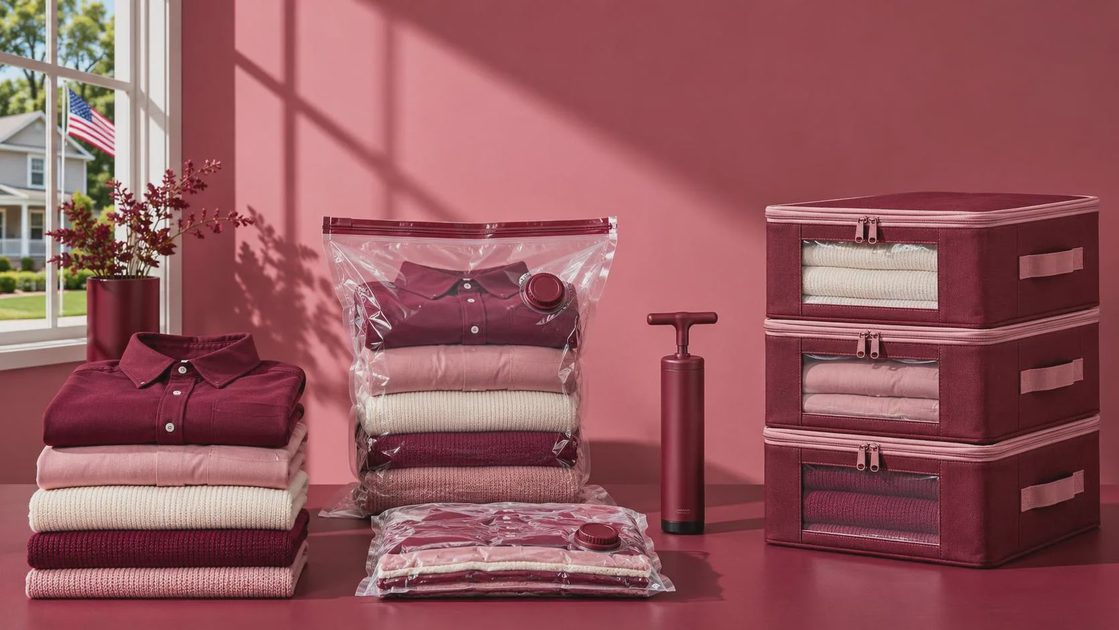
T-shirts, cotton pajamas, casual synthetic layers, and sturdy seasonal basics are generally reasonable candidates. Fold them flat, group them by season or person, and avoid packing so tightly that the zipper can't close cleanly. Check the care label first, particularly for garments with coatings or unusual construction.
For vacuum sealer clothes packing, separate items with zippers, hooks, or rough hardware from thin fabrics. Turn hardware inward or wrap the garment in a clean cotton layer. Sharp corners can damage the bag as well as snag a neighboring shirt.
Use more caution with down coats, sleeping bags, and other lofted items. Prolonged compression can affect loft, and manufacturers may specify loose storage. Follow the item's care instructions; when in doubt, hang it or use a roomy breathable storage bag. A bulky coat taking up space is annoying. A coat that no longer insulates properly is worse.
Keep leather, suede, fur, structured hats, and heavily embellished garments out of compression bags. Leather and suede can crease or suffer from unsuitable storage conditions; beads and rigid details can press into fabric or puncture plastic. Tailored jackets and formalwear are also better kept on appropriate hangers or in garment bags, with room to hold their shape.
How to seal a bag without creating a mess
Wash or clean garments according to their labels, then make sure every layer is fully dry. That includes thick waistbands, seams, and pockets. Sealing in moisture can encourage mildew and leave odors trapped with the clothes.
Lay the bag on a bed or other flat surface. Place folded garments below its marked fill line, if it has one, and keep fabric away from the zipper. Close the seal carefully across its full length. Attach your vacuum hose to the valve according to the bag's instructions, remove air, and close the valve promptly. Some bags use a hand pump or a roll-to-remove-air design instead, so match the method to the bag.
Don't chase the flattest possible package. Stop when the bag fits its designated space without turning the contents into a rigid brick. Label the outside with the contents and the date packed; a piece of removable tape is easier to read than a mystery pile of black fabric through cloudy plastic.
Plan for air leaks and seasonal turnover
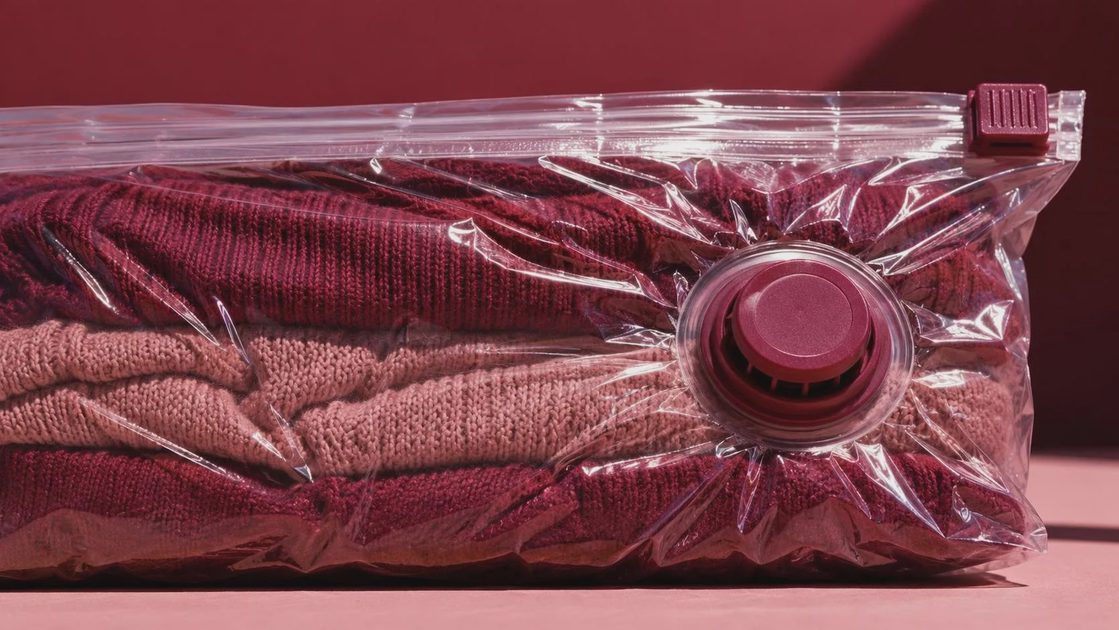
A vacuum sealer clothes bag can slowly reinflate if the zipper isn't fully closed, the valve leaks, or the plastic gets punctured. Check it after packing and again before stacking other things on top. If it has expanded, inspect the seal for trapped fabric or debris and reseal it. A damaged bag may need replacing.
Compression is a space-saving method, not a substitute for a dry room. Store bags away from direct heat, sharp shelf edges, and damp exterior surfaces. A plastic bag is not a guarantee against water damage or pests; inspect stored clothing periodically rather than assuming it's protected indefinitely.
When the season changes, open the bags and give the garments time to relax before putting them away. Some wrinkles will need laundering or steaming, following the care labels. If you notice a musty smell or visible mildew, don't put the items straight back into the closet. Isolate them and clean them using methods appropriate for the fabric; discard a bag that is dirty or damaged.
When compression isn't the right closet fix
If you're packing items you wear every week, the problem is probably access, not volume. Keep everyday clothing on reachable rods or shelves. Reserve the compressed bags for things you can reasonably leave alone for a season.
Likewise, don't design a shelf around the smallest possible compressed package. Bags can reinflate, and your wardrobe will change. Measure the bags after sealing, allow room to handle them, and check the shelf's load capacity before stacking. A shelf full of compressed clothes may look light, but removing air doesn't remove the weight of the fabric.
Vacuum sealer clothes storage works best as a supporting system: it clears space for what you wear now while keeping off-season basics identifiable and reachable. Start with one shelf and a small batch. If retrieving the bags requires unloading half the closet, change the location before buying more bags.




No comments yet — be the first to share a thought.