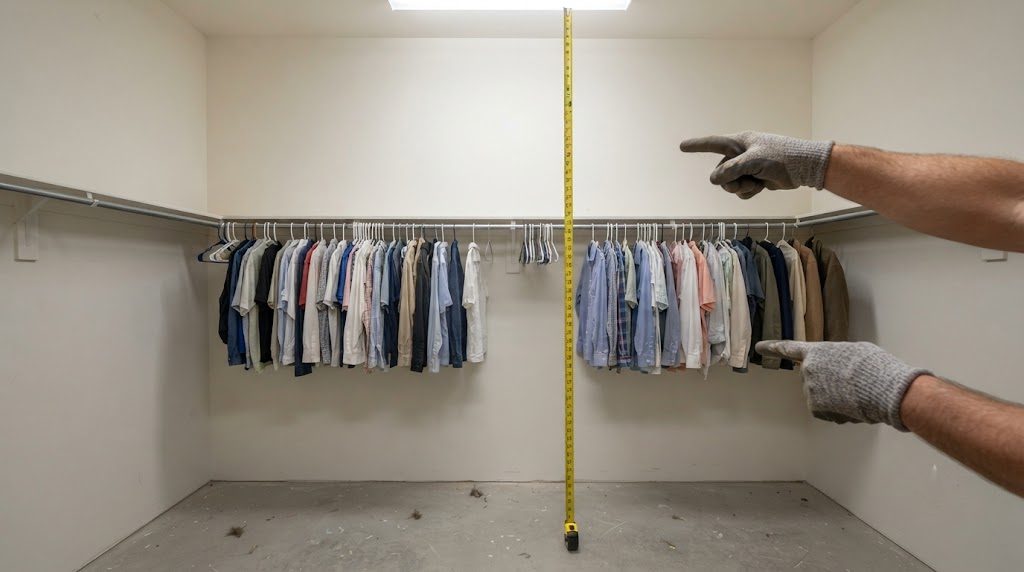
Walk into almost any builder-grade closet in America and you'll see it: a single rod, mounted at shoulder height, running wall to wall. Shirts hang above. Empty air sits above them, all the way to the ceiling. Empty air sits below them, all the way to the floor. This isn't a closet. It's an empty room with a pole in it.
The single-rod layout wastes roughly 40% of your available hanging volume. Not an estimate — a measurement, taken across dozens of closets I've redesigned. The math is simple: a standard closet ceiling is 8 feet high. A single rod holds clothes that occupy maybe 3 to 4 feet of vertical space. The remaining 4 to 5 feet are doing nothing. Multiply that by the width of the closet, and you've paid for storage you aren't using.
The fix isn't complicated. It's just geometry.
The Double-Hang Zone
Most garments don't need full-length hanging. Shirts, blouses, folded trousers, skirts, and jackets all hang comfortably in roughly 38 to 42 inches of vertical space. That means you can stack two rods — one above the other — and instantly double your hanging capacity on the same wall.
How to Set It Up
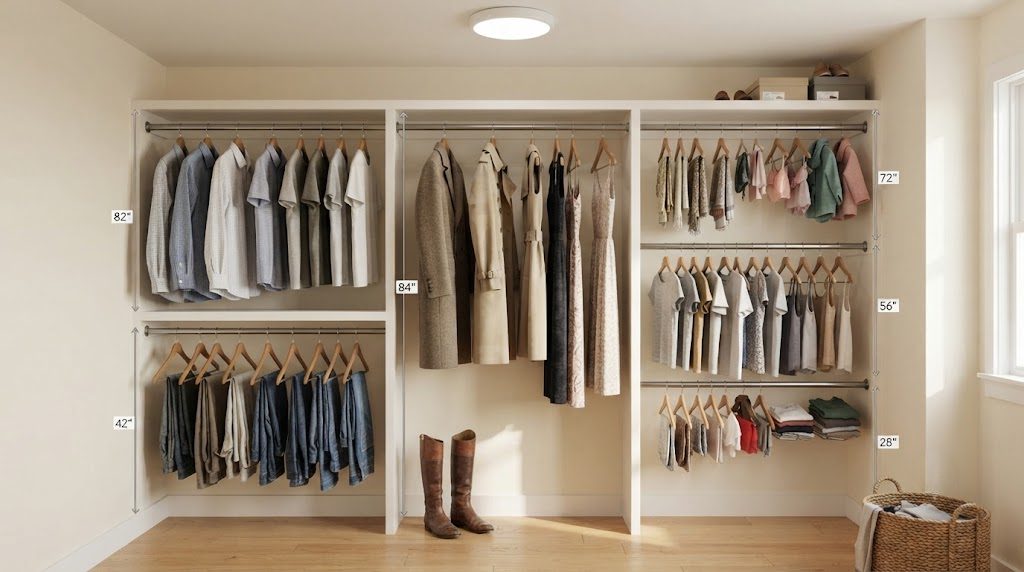
Mount the upper rod at 82 inches from the floor. Mount the lower rod at 42 inches from the floor. That leaves approximately 40 inches of clearance below each rod. This configuration works for the vast majority of shirts, blouses, and folded pants. It won't work for maxi dresses, full-length coats, or long evening wear. Those pieces need their own zone.
Measure your wardrobe before you commit. Count how many items actually require a drop longer than 45 inches. I've had clients who insisted they needed "lots of long hang" until we counted — and discovered six long dresses and thirty-five shirts. The single rod was serving six items while wasting space for thirty-five. That math doesn't add up.
The Long-Hang Zone
Some garments demand full height. Evening gowns, winter overcoats, long dusters, and formal dresses need a clear drop of 60 to 65 inches from rod to floor. The mistake most people make is giving this long-hang space to everything. Don't.
Designate one section of your closet — often a corner or one end of a wall — as the long-hang zone. Mount a single rod at 72 to 80 inches, depending on your ceiling height, and let that section serve the pieces that actually need it. The rest of the closet goes double-hang. You've just created dedicated long-hang storage without sacrificing the majority of your rod space to empty air.
The Three-Tier System
In closets with high ceilings — 9 feet or more — you can go further. A three-tier system uses short hanging sections for items like folded jeans, children's clothing, or accessories. Mount rods at 84, 56, and 28 inches, adjusting for the specific items. Each tier needs only 24 to 28 inches of drop. In a 9-foot closet, three tiers give you triple the hanging capacity of a single rod. That's not a renovation. That's rod placement.
This isn't about buying more closet. It's about using the closet you already have. Before you knock down a wall or add square footage, look at your rod layout. If every shirt you own is hanging from a single rod at 64 inches, you've got empty real estate above and below. Raise one rod. Add another. Suddenly you've doubled your storage. No permit required.




No comments yet — be the first to share a thought.