High-capacity wardrobe systems seasonal rotation only works when the closet is designed around the clothes you actually own, not a showroom's carefully edited sample wardrobe. If you live in a place like Oklahoma City, where winter coats and summer linen both earn serious space, the system has to handle volume without turning every changeover into a floor-level excavation. Start with the room's structure, then choose the storage hardware.
The first mistake I see is buying components before measuring the closet. A rod system can look generous online and still leave you with crushed sleeves, inaccessible corners, or a center aisle too narrow to open drawers. A functional walk-in needs at least 36 inches of clear aisle space. If two people will dress at the same time, 42 to 48 inches is more comfortable. Mark those dimensions on the floor with painter's tape before ordering anything.
Start With the Closet Bones
Find the studs before you specify a wall-mounted system. High-capacity wardrobe systems seasonal rotation place more weight on their uprights, shelves, and rods than a typical reach-in installation, especially when you store denim, boots, wool coats, and folded sweaters. A single loaded hanging section can become surprisingly heavy. Mounting into drywall anchors alone is a poor shortcut for a permanent installation.
Check the door swing, baseboards, outlets, and HVAC registers as well. I once reviewed a plan where an entire shoe wall was drawn over the only electrical outlet in the room. The shelves looked fine on paper, but the outlet became useless after installation. If you want a charging station, motion lighting, or a small steamer, identify those circuits before the panels go up.
For hanging depth, allow roughly 24 inches for standard clothing. Coats and bulky jackets need more attention because their shoulders can press against the door or neighboring shelf. Keep long-hang sections about 60 to 70 inches high, depending on your garments and whether you want a drawer unit below. Double-hang sections are efficient for shirts, skirts, and trousers, but they should not replace every long-hang area.
Divide Capacity by Clothing Type
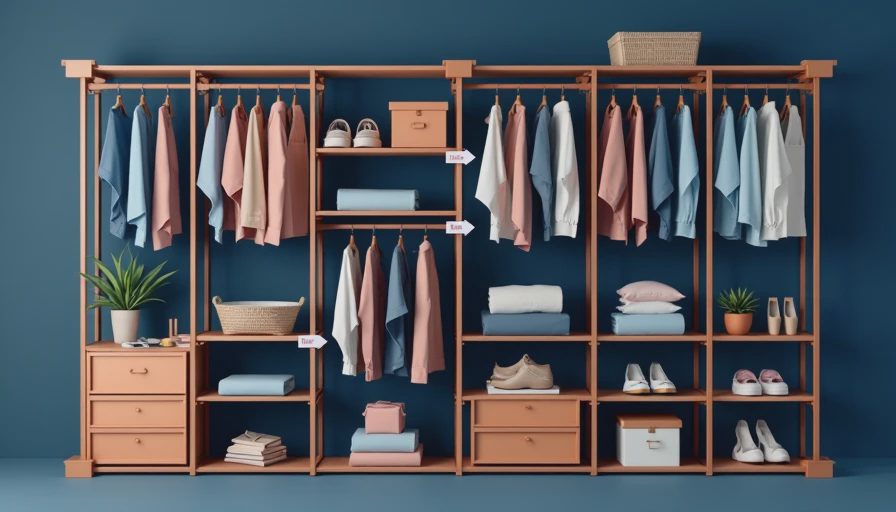
High-capacity wardrobe systems seasonal rotation need zones, not just more shelves. Put everyday shirts and pants in the easiest-to-reach center sections. Reserve the highest shelves for labeled bins containing off-season items, spare bedding, or luggage. If you have to move three boxes before reaching a coat, the system is technically large but practically weak.
A useful starting layout is one long-hang bay, two double-hang bays, a drawer stack, and adjustable shelving. That combination suits many wardrobes better than a wall of identical cubbies. Dresses, jumpsuits, robes, and long coats need uninterrupted height. Shirts and folded pants need accessibility. Shoes need ventilation and enough vertical clearance for boots, not a decorative row of narrow shelves that only fits flats.
Shelf depth matters. Twelve inches works for many folded clothes and handbags, while 14 to 16 inches gives bulky sweaters more room. Going much deeper can create a dark back row where forgotten items disappear. I would rather specify adjustable shelves at the correct depth than fill the room with oversized fixed cubbies.
Make the Seasonal Swap a Procedure
High-capacity wardrobe systems seasonal rotation should make the seasonal swap predictable. Do not remove everything and pile it on the bed. Begin with one category, such as outerwear, then move to sweaters, shoes, and accessories. Keep a laundry basket nearby for pieces that need cleaning or repair before storage. A damaged cashmere sweater should not go into a sealed bin for six months.
Use breathable garment bags for wool coats and structured pieces. Plastic dry-cleaning bags trap moisture and can encourage odor or fabric damage over time. For folded clothes, choose lidded bins that stack securely but are light enough to handle from a step stool. Label each bin on two sides with both the contents and the season: “Winter sweaters” is more useful than “top shelf.”
The best location for seasonal storage is usually the upper perimeter of the closet, not the back of a deep drawer. Keep a small active transition zone for weather that changes quickly. In Oklahoma, a heavy coat can be unnecessary one week and essential the next, so I keep light jackets accessible longer than a calendar-based plan suggests.
Choose Hardware That Can Be Adjusted
High-capacity wardrobe systems seasonal rotation benefit from adjustable standards, movable shelves, and rods that can be repositioned without rebuilding the wall. Elfa-style track systems, ClosetMaid components, IKEA PAX frames, and custom laminate systems can all work when their dimensions match the room. The right choice depends on wall condition, budget, finish preferences, and how likely your wardrobe is to change.
For a flexible installation, adjustable shelving is worth paying for. A shoe shelf that fits ankle boots today may need to hold tall boots next winter. Similarly, a drawer stack should not consume the only location where a future double-hang section could go. Before finalizing the design, measure your longest garments, tallest boots, folded sweater stacks, and largest handbag.
Do not overspend on accessories before funding the basic structure. Soft-close drawers and velvet hangers are pleasant, but they cannot fix a 30-inch aisle or a rod installed too high to reach. Depending on materials and installation, a modest reach-in upgrade may run from several hundred dollars to a few thousand, while a larger custom walk-in can climb well beyond that. Spend first on load-bearing parts, lighting, and usable access.

Plan Lighting and Visibility
A seasonal system fails when the storage is technically present but visually dark. Put the lighting on a convenient switch, and consider motion-activated LED strips inside cabinets or under shelves. Avoid placing a single ceiling fixture behind your body; it will cast a shadow directly over the clothes you are trying to identify.
Use neutral or warm-neutral light so colors remain reasonably accurate. A blue-heavy bulb can make navy look black and cream look gray, which is not helpful during a rushed morning. Add lighting to drawers only if the drawer fronts and wiring details have been considered early. Retrofitting electrical work after shelves are installed is expensive and often leaves visible cords.
Mirrors also need clearance. A full-length mirror requires enough space to step back at least several feet, and the door should not collide with it. I prefer a mirror on a wall outside the main hanging aisle when possible. That keeps dressing traffic from blocking access to the most-used sections.
Test the Plan Before Installation
Before ordering high-capacity wardrobe systems seasonal rotation, make a full-scale mock-up with cardboard boxes, painter's tape, and a folding table. Mark the proposed drawer fronts, shelves, and hanging rods. Stand in the aisle with the door open. Pull out an imaginary drawer while another person walks past. Reach for the upper shelf using the step stool you actually own.
This simple test catches expensive errors. A client once wanted a central island that looked reasonable in a drawing, but the taped outline left barely enough space to turn around with a laundry basket. We reduced the island depth and gained a closet that worked every morning instead of a furniture obstacle that photographed well.
Measure twice before fabrication, especially in older homes where walls are rarely square. Confirm the finished baseboard height, outlet locations, ceiling slope, and trim thickness. Ask how the installer handles corners and end panels. A clean corner detail often matters more than an extra narrow shelf.
The Practical Standard
A good high-capacity wardrobe systems seasonal rotation plan does not require a luxury budget or a room full of matching cabinetry. It requires accurate measurements, sensible zones, adjustable components, and a clear process for moving clothing in and out. If the closet cannot handle a full coat, a stack of sweaters, or a pair of boots without blocking daily clothes, it is not high-capacity; it is merely crowded.
Start with studs, aisle width, door swing, lighting, and the dimensions of your real wardrobe. Then assign each category a reachable home and reserve upper storage for what is genuinely seasonal. That order of operations saves more money than another round of decorative bins, and it produces a closet that performs when you are half-awake at 6:15 AM.




No comments yet — be the first to share a thought.