
Good bottom of closet storage starts with the space you actually have after clothes are hanging, doors are open, and your feet are in the aisle. For most walk-in closets, a low shoe shelf, a shallow pullout, or a pair of handled bins will do more useful work than a stack of matching boxes. Measure the clear space first; then choose storage that doesn't make you move three things to reach one pair of shoes.
Measure the floor before you fill it
Start with the longest clothes in each hanging section. Put them on their usual hangers, measure from the floor to the lowest hem, and leave a few inches of breathing room. A shelf squeezed directly under a dress will collect fabric and dust every time you slide something out. For short-hanging shirts and jackets, there's often room below for shoes or a low drawer; under long dresses and coats, the floor may be better left clear.
Next, measure from the back wall to the front edge of the hanging clothes, not just to the rod. Jackets and hangers project into the room. A unit that fits neatly under the rod on paper can still stick out beyond the clothes and trip you in the aisle.
For bottom of closet storage, I aim to preserve about 36 inches of clear walking space where the room allows. That's a practical target, not a universal code rule. Measure with drawers and doors open, too: a 16-inch-deep drawer needs space in front of the cabinet as well as space for the cabinet itself. If accessibility is a concern, plan around the user's actual turning and reach needs rather than relying on a single aisle number.

Check the door swing, baseboards, floor vents, outlets, and any access panels before ordering a unit. A cabinet can sit in front of an outlet without leaving it usable; a bin can quietly block a floor vent. Leave these features accessible and avoid covering vents. If a built-in will obstruct an outlet or affect wiring, bring in an electrician before installation.
Give shoes a shelf, not a pile
Shoes are the obvious candidates for bottom of closet storage, but the right shelf depends on the shoes, not a standard organizer's advertised capacity. Measure your longest pair from heel to toe. A shelf around 12 to 14 inches deep works for many shoes, but larger sizes and some boots need more. Add a little room to grasp the pair without knocking its neighbors off.
Allow roughly 6 to 8 inches of vertical clearance for many flats and low shoes, and measure heels individually. An adjustable shelf is worth considering if your collection changes. For tall boots, measure their standing height and give them a separate opening; folding a tall shaft just to fit a short shelf can leave a crease.
A flat shelf is easier to use than a steeply sloped one when you're placing everyday shoes below hanging clothes. If the shelf is low enough that you have to kneel to see the back, use one row rather than burying a second row behind it. A washable tray near the closet entrance is useful for damp or dirty soles, but let wet shoes dry before enclosing them.
If you're building shelves, account for the baseboard. A unit pushed against the floor may have a gap at the wall unless it's scribed or installed above the trim. Don't remove baseboard until you know how the finished edges will look and whether the unit will be permanent.
Use drawers and bins where they can open
A low drawer makes sense for compact, frequently used items: workout clothes, pajamas, or accessories that don't need to hang. Before specifying one, measure its full extension and stand in the aisle with the opening marked on the floor. Can you still reach the contents without backing into the opposite wall? If not, a shelf with a removable bin may work better.
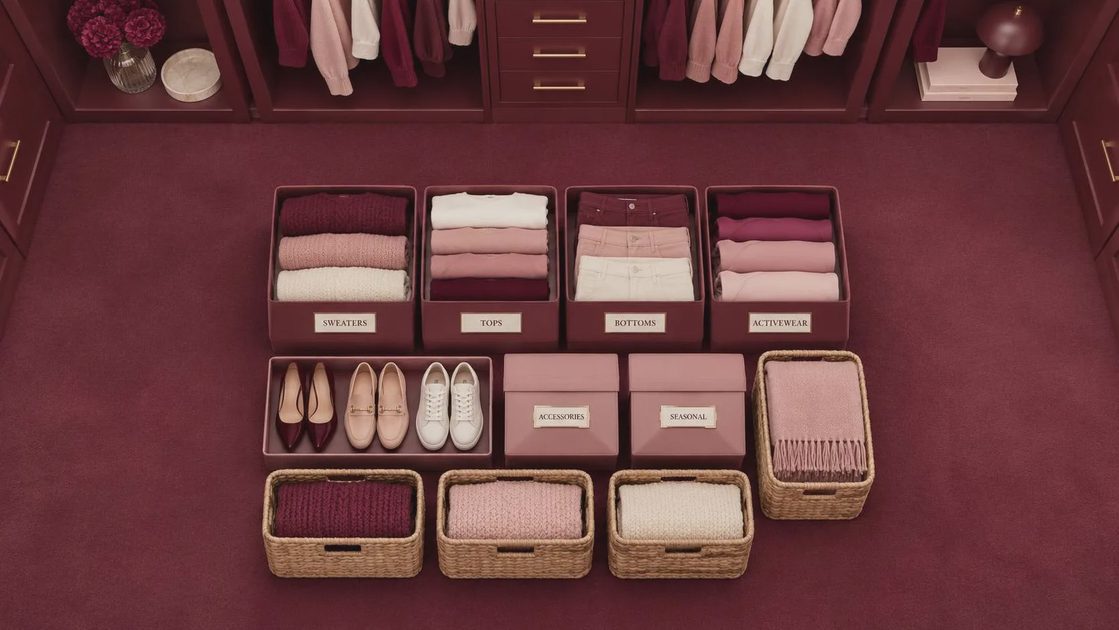
Bins are useful for seasonal shoes, spare bedding, or other things you don't reach for every morning. Choose a size you can lift when full, and put a handle or label where you can see it from the aisle. Under hanging clothes, open-top bins make access easy but collect dust; lidded bins protect the contents but need extra clearance to remove the lid.
For soft goods, don't pack the container so tightly that the lid bows or the fabric stays compressed indefinitely. Clean and fully dry clothing before storing it. Avoid sealing damp items in a plastic bin, and address any closet moisture or musty smell before adding more storage.
Rolling containers can be convenient on a hard, level floor, but check the wheel height and the direction the container needs to travel. On thick carpet, a handled bin that slides or lifts out may be less frustrating. Either way, leave enough room to pull it completely clear of the hanging clothes.
Build for the room, not just the opening
Freestanding bottom of closet storage is the simplest option when you're renting, testing a layout, or working around uneven walls. Measure the unit's outside dimensions, including handles, feet, and any overhang. Follow the manufacturer's anchoring instructions, particularly for units that could tip when loaded or when a drawer is opened.
Built-in shelves can use an awkward wall more efficiently, but they deserve the same planning as the rest of the closet. Locate studs before fastening wall-supported components, and use a mounting method suitable for the wall and the expected load. Don't assume drywall anchors alone are appropriate for a loaded shelf; consult the hardware instructions or an installer if the support is uncertain.
Finally, leave the floor clear where you need to stand, turn, and reach. The last six inches of storage capacity aren't a win if they turn getting dressed into an obstacle course. Mark the proposed footprint with painter's tape, hang the clothes back up, and walk the route before you buy or build.


No comments yet — be the first to share a thought.