
Good closet top shelf organization starts with the shelf, not the bins. Check how much weight it can carry, how far you can reach, and whether a door or light fixture gets in the way. Then give the highest space to lightweight, occasional-use items such as spare bedding, seasonal sweaters, and empty luggage. Anything you need every morning belongs lower down.
Check the shelf before you fill it
A shelf that looks solid is not necessarily ready for a row of full storage boxes. Look for sagging, loose brackets, cracked wall anchors, and shelves that tip when you press on the front edge. If you are adding or moving a shelf, locate the studs and follow the shelf and bracket manufacturer's installation and load instructions. Drywall alone is not a dependable substitute for properly supported framing.
Long spans need particular attention. A shelf's capacity depends on its material, thickness, depth, supports, and how the weight is distributed. There is no single safe weight limit I would apply to every closet shelf. If yours has no known rating, don't load it with books, tools, or dense stacks of jeans. Reinforce or replace a questionable shelf before organizing it.
Next, look up. Storage must not touch a light fixture or block its intended clearance. Closets have specific electrical and fire-safety requirements for lighting, so have an electrician check an older exposed bulb or any questionable fixture before you build storage around it. Keep access to attic hatches and other service points clear, too.
Measure the opening, not just the shelf
For closet top shelf organization, three measurements matter: usable shelf depth, the vertical clearance above it, and the width of the opening you have to maneuver a container through. A 14-inch-tall box won't be much help if a door header leaves only 10 inches of clearance where you need to lift it in.
Measure from the shelf surface to the ceiling or obstruction, then allow room to get your fingers around a handle and tilt the container. A couple of inches of extra vertical space is a useful starting point, but bulky or rigid boxes may need more. Cut a cardboard template to the proposed box's outside dimensions and try the route before buying a matching set.
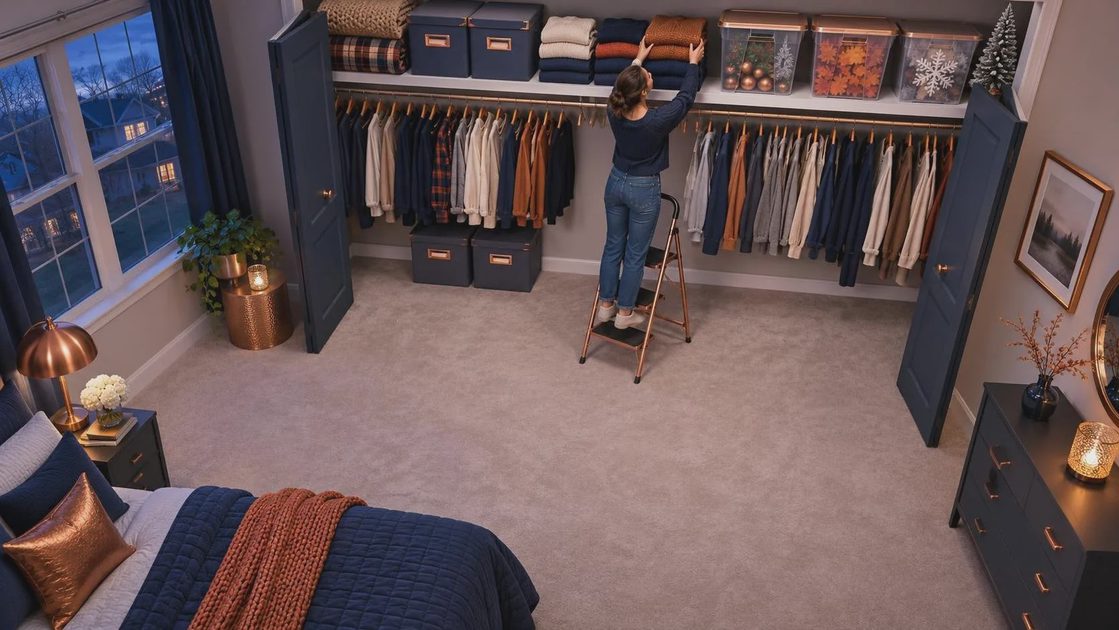
Depth is just as important. A 12-inch-deep shelf may suit folded sweaters or narrow bins; a 16-inch-deep shelf can hold larger containers but makes the back harder to see and reach. Those are planning examples, not universal requirements. Measure your actual items and the shelf you have before changing anything.
Also check the door swing and the path from your step stool. A hinged closet door can obstruct the end of a shelf even when the shelf itself fits neatly on the plan. In a walk-in, aim to preserve a clear 36-inch aisle where the room allows; measure between the things that actually project into that aisle, including hanging clothes and open drawers.
Give each section a job
The best closet top shelf organization follows how often you need something. Put off-season clothing over the hanging section it relates to, spare sheets near the bedroom side, and travel items together at one end. That way, a seasonal swap is a short transfer down the wall instead of a hunt through every box.
Store heavy or frequently used items between waist and shoulder height when possible. Above your head, choose light loads you can lift down without straining or standing on tiptoe. A small box of scarves is a better candidate than a large box packed with winter boots. Keep a stable step stool nearby; don't climb on a drawer or an office chair.
For folded clothing, aim for short stacks rather than a tower that falls when you pull out the bottom sweater. Shelf dividers can keep adjacent stacks separated, provided they fit the shelf's thickness and depth. Leave a little open space beside each stack so you can put clean items away without compressing everything.
Bags need a different approach. Stand structured bags upright if the shelf height allows, and support them with soft stuffing rather than crushing them under a pile. Dust bags can protect them while leaving the contents recognizable if you label the outside. Store luggage empty or fill it only with light items you won't need separately for months.
Choose containers for access, not a matching photo
Containers earn their place when they keep loose items together or make a high shelf safer to use. For closet top shelf organization, I prefer several manageable containers to one enormous bin: you can bring down only the category you need, and the load is easier to control.
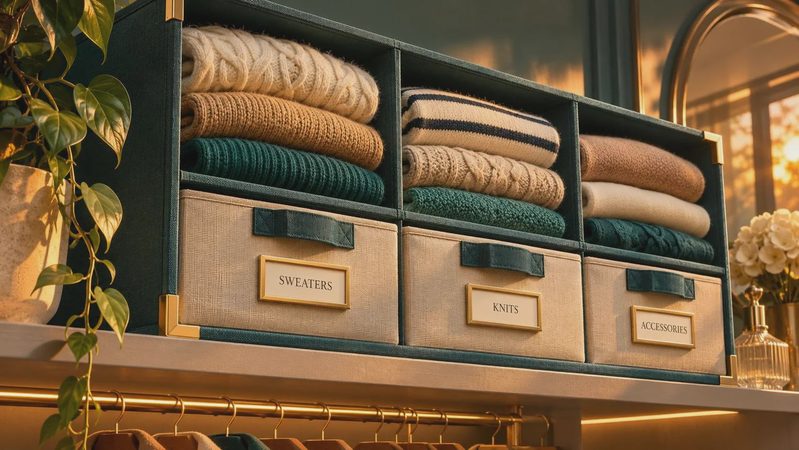
Soft-sided, open-top bins work for lightweight textiles when you can see inside from the stool. Lidded boxes are useful for longer-term storage, but check that you can remove the lid without taking down neighboring boxes. Clear containers help identify contents; opaque ones benefit from a label on the outward-facing side. Use plain descriptions such as "winter scarves" rather than a vague "seasonal."

Before you commit to a container, test its full weight and grip. A handle positioned on the short end is useful only if that end faces out and you can reach it. Don't pack a deep bin so tightly that you have to yank it forward from above your head. And don't assume a lid makes a container airtight; if moisture is a concern, address the room conditions before storing vulnerable clothes or linens.
Make an existing shelf work harder
If the shelf is sound but the space above it is tall, an additional shelf may be more useful than taller boxes. Check the height of what you intend to store on both levels, including the clearance needed to lift each item out. Then confirm that the new supports are appropriate for the wall and intended load. An intermediate shelf that leaves two unusably short openings is not an upgrade.
If you can't alter the shelf, removable dividers or smaller containers can make the existing surface more orderly without drilling. Avoid stacking separate boxes to the ceiling: reaching one box should not require balancing another overhead. Place the items you use least at the far ends, not behind a second row you have to unload to reach.
Finally, leave a little breathing room. An entirely packed shelf gives you nowhere to put a bag after a trip or a sweater after the weather changes. Review the contents at the start of each season, move what you need into easier reach, and return the stool to its assigned spot. The goal is a shelf you can use without rearranging the whole closet first.




No comments yet — be the first to share a thought.