
The best closet top shelf organizer is one you can reach, lift, and put back without knocking down the rest of the shelf. For most closets, that means a few lightweight, labeled bins for seasonal items or dividers that keep bags and sweaters upright. Before buying either, check the shelf's support, the clearance above it, and what happens when the closet door opens.
If you want a place to start, look at IKEA SKUBB storage boxes for soft seasonal clothing, clear bins from The Container Store for items you want to identify at a glance, and shelf dividers from The Home Edit by iDesign for upright stacks or handbags. These are different approaches, not interchangeable solutions. Check the dimensions and attachment method of the individual item against your shelf before ordering.
Start with the shelf, not the container
Measure the usable shelf depth from the back wall to the front edge. Then measure the clear height from the shelf surface to the ceiling or any obstruction, including a sloped ceiling, light fixture, or sprinkler head. Finally, measure the width between side walls or vertical panels. Write down the smallest measurement wherever the space is uneven.
Leave working room above a bin. A container that fits into a 12-inch opening with half an inch to spare may be impossible to lift off the shelf without tipping. As a starting point, allow at least 2 to 3 inches above a lidded bin, then check whether you can pull it forward and lift it safely from your standing position. A pull handle helps, but it does not make a heavy bin safe overhead.
Look at the shelf itself. A long span with a visible bow, loose brackets, or questionable wall anchors needs attention before you add storage. Solid mounting matters more than a pretty basket. If you're adding brackets, locate studs where possible and use hardware appropriate to the shelf, wall, and expected load. For an existing manufactured system, follow its installation instructions and load limits rather than assuming every shelf can carry the same weight.
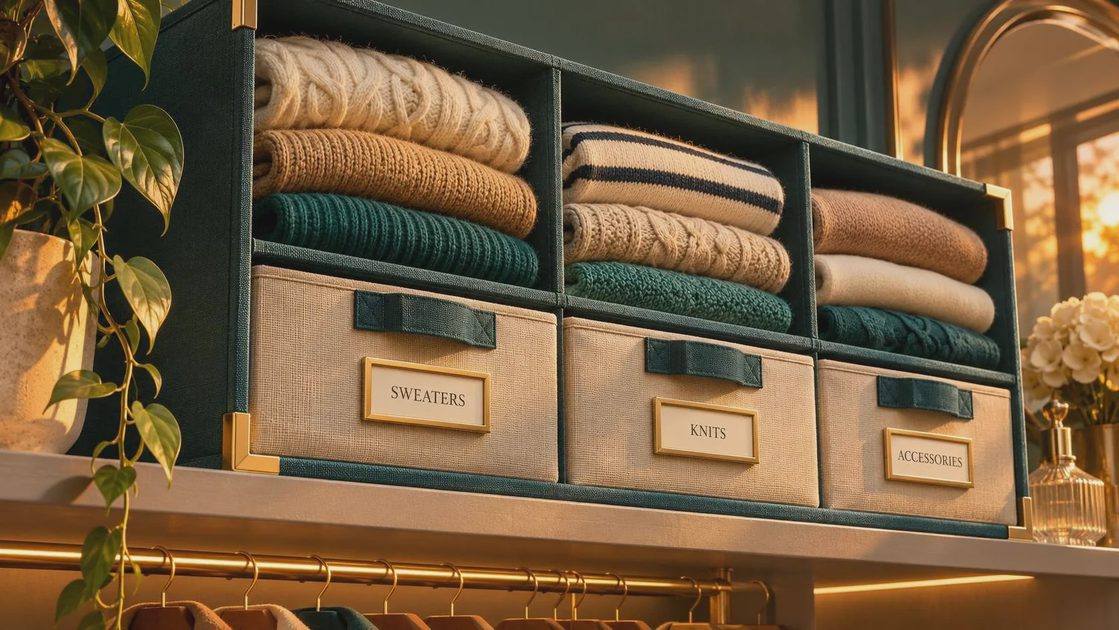
Pick the right closet top shelf organizer for the contents
Closed bins work well for off-season T-shirts, scarves, and other soft goods that do not need to be accessed every morning. Choose a size you can carry with one hand on each side, and leave a little empty space inside so the lid closes without compressing everything into a brick. Put the label on the side facing the room, not on the lid you can't see.
Open bins make sense when the contents are light and you reach up often: spare pillowcases, for example, or a collection of baseball caps. Their limitation is dust. In an open walk-in closet, a lid can be worth the extra step for items that sit untouched through a season.
Dividers are useful for structured handbags, folded denim, and sweaters that tend to slump into the next stack. They don't add storage capacity; they keep the space you already have from turning into one long pile. Check whether a divider clips over the shelf, slides onto it, or requires screws. A clip designed for a thin wood shelf may not fit a thick shelf or a wire rack.
For wire shelving, test the base of any bin before filling it. Narrow feet or a flexible bottom can catch or tilt between the wires. A properly sized shelf liner can make the surface more stable, but it won't increase the shelf's load capacity. Don't cover ventilation or alter a system in a way its manufacturer prohibits.
Plan around reach and daily use
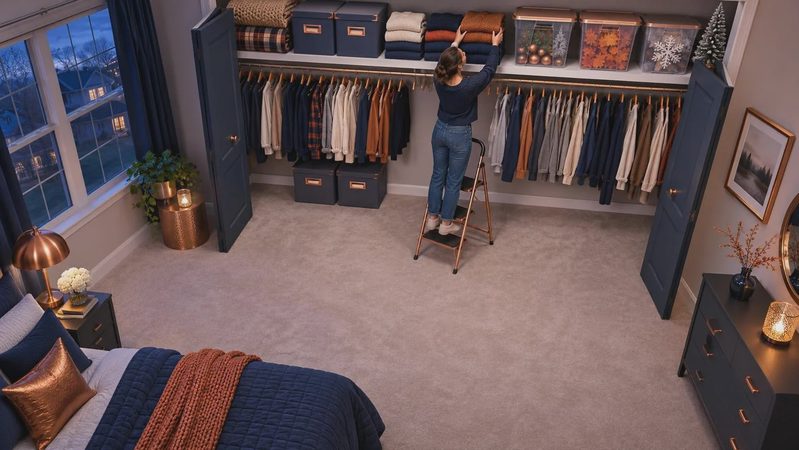
Stand in the closet and mimic the movement you will make when taking a bin down. Can you slide it forward without hitting the door trim? Can the door open fully while you're standing in front of the shelf? If you need a step stool, is there room to place it flat without backing into an island or a hanging section?
Keep everyday items within easier reach and reserve the top shelf for things you use less often. The distinction matters more than whether the bins match. A holiday sweater can live overhead; the workout clothes you need at 6:15 a.m. probably should not.
Use a stable step stool rather than a chair or the closet's lower shelving. Store heavier objects lower down, and bring a bin to waist height before opening it. If retrieving it requires stretching over a rod or lifting a full container above your head, downsize the container or move those contents elsewhere.

For handbags, upright storage works only when the shelf is tall enough that handles aren't crushed against the ceiling. Give each bag enough room to come out without dragging its neighbor along. Soft bags may need gentle internal support; don't pack them so tightly that their shapes distort.
Make the space above the hanging rod work
A common mistake is treating the entire shelf depth as accessible storage. If the shelf is deep and high, a second row of small containers behind the first can become invisible. Use one row of appropriately sized bins, or put rarely needed items at the back only if the front row is easy to remove. A label at the shelf edge can tell you what's behind without forcing you to pull everything down.
For folded clothing, divide the shelf into stacks narrow enough to lift without disturbing the next one. Shorter stacks are easier to manage than a tower of sweaters pressed against the ceiling. Leave a gap above each pile so you can remove the top garment without scraping it along the surface above.
If you're renovating, check lighting before installing a new shelf or changing its height. A deep shelf can cast a shadow over the hanging area below, and a tall bin can block an existing fixture. Keep stored items clear of lights, electrical equipment, and any sprinkler head; follow the applicable installation and clearance requirements rather than guessing.
Buy a small batch first
Once you've measured, group the actual contents on a bed or table and estimate how many containers you need. Buy one bin or divider style first, check the fit on the shelf, and load it with the intended contents. Pay attention to the weight and the motion required to get it down, not just the dimensions printed on the package.
Then buy the rest. A top shelf doesn't need a wall of identical boxes to work; it needs clear categories, sound support, and enough breathing room that putting something away is as easy as taking it out.




No comments yet — be the first to share a thought.