
The best top of closet storage is a sturdy, reachable shelf reserved for light things you don't need every morning. Before you buy matching bins, find the studs, check the light fixture, and figure out how you'll reach the shelf without leaning over a hanging rod. An upper shelf can earn its footprint, but not if opening one box brings an avalanche down with it.
Start with the room, not the containers
Look at what already occupies the upper part of the closet: ceiling lights, sprinkler heads, attic access panels, vents, and the path of the door. A shelf or tall cabinet must not block access to a panel or obstruct airflow. If you have sprinklers, maintain the required clearance; ask your local building department or a qualified installer what applies rather than guessing.
For a new shelf, locate the wall studs and plan the supports before deciding how much weight to store. A long shelf full of books or dense boxes puts considerably more demand on its brackets than one holding spare pillows. Follow the shelf and hardware manufacturers' load limits, including their requirements for bracket spacing and fasteners. A capacity printed on a bracket is not a promise that the drywall, screws, and shelf board can support the same load as an assembled system.
In a renovation, mark lighting and electrical locations before installing a full-height closet system. A cabinet that hides a switch or leaves an outlet inaccessible can turn an otherwise tidy installation into an expensive correction. If a fixture needs to move, bring in an electrician rather than building around an unsafe clearance.
Set a shelf height you can live with
There is no magic height for top of closet storage. Measure from the floor to the ceiling, then measure the tallest items that must fit underneath. Above a hanging section, leave enough room to lift hangers off the rod without scraping knuckles or catching the shelf edge. Mock up the proposed height with painter's tape and try the motion before drilling.
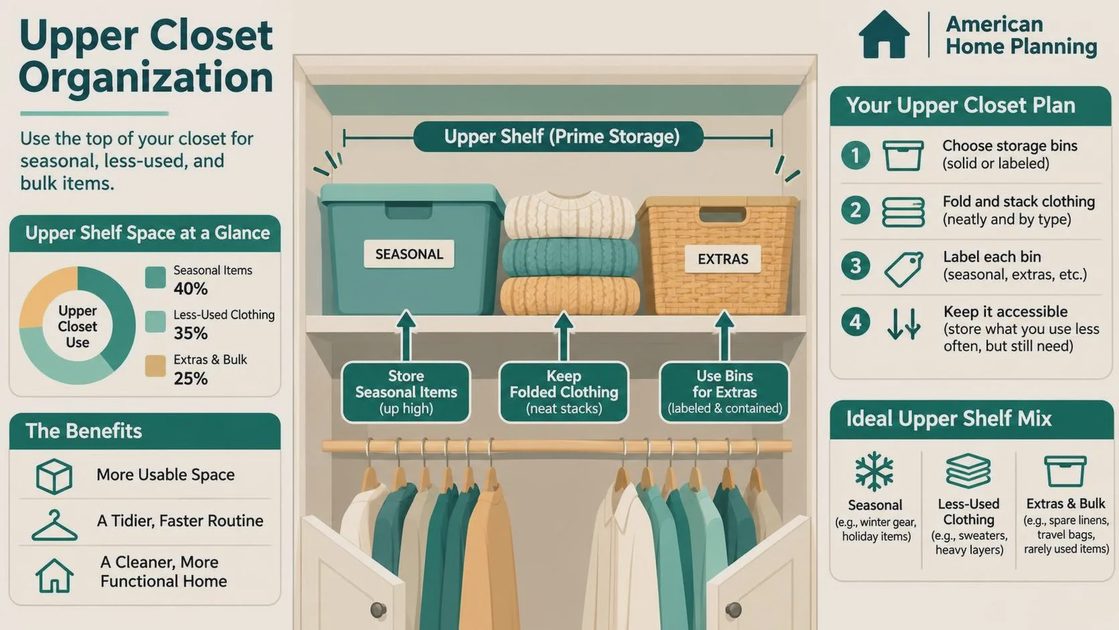
A shelf around 12 to 16 inches deep is a useful starting point for folded linens and modest bins. Deeper is not automatically better: items at the back become invisible, and a deep shelf above a rod can make it harder to reach hangers. Measure your intended containers, including handles and lids, and leave a little clearance to lift them out.
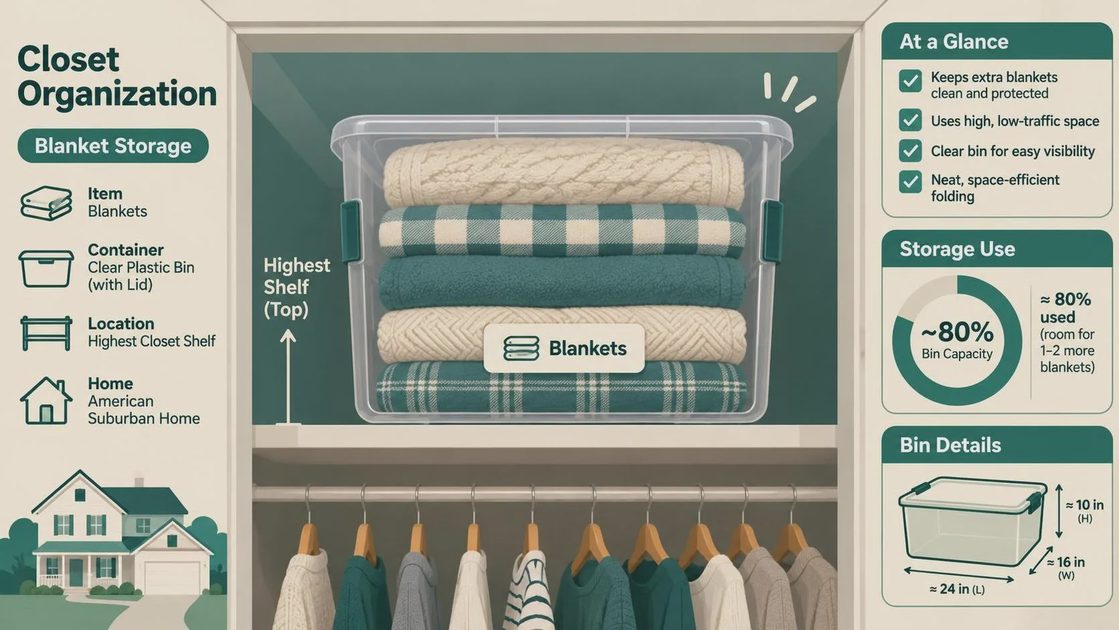
Allow enough vertical space above the shelf to remove the contents, not just fit them. A 12-inch-tall box squeezed into a 12-inch opening has nowhere to go. Leave several inches above a lidded bin where possible, and check whether the ceiling slopes or a door casing reduces the usable opening at one end.
If you're planning two upper shelves, resist making both so high that you need a ladder for every item. One accessible shelf and one genuinely occasional-use shelf often work better. Measure with your own step stool in place, and make sure the door can still open while you're standing on it.
What belongs on the highest shelf
Think light, contained, and infrequent. Spare bedding, out-of-season scarves, empty travel bags, and soft holiday linens are good candidates. Bulky coats can go up there in breathable storage bags if they're clean and completely dry. Keep everyday shoes, heavy tools, important documents, and anything you reach for weekly somewhere lower.
For top of closet storage, I prefer several manageable containers to one enormous tote. A bin that's easy to lift from waist height can become awkward when pulled down from above your head. Choose a size you can handle with both hands while standing on the floor or a stable step stool, and leave a gap between containers so you can grip them.
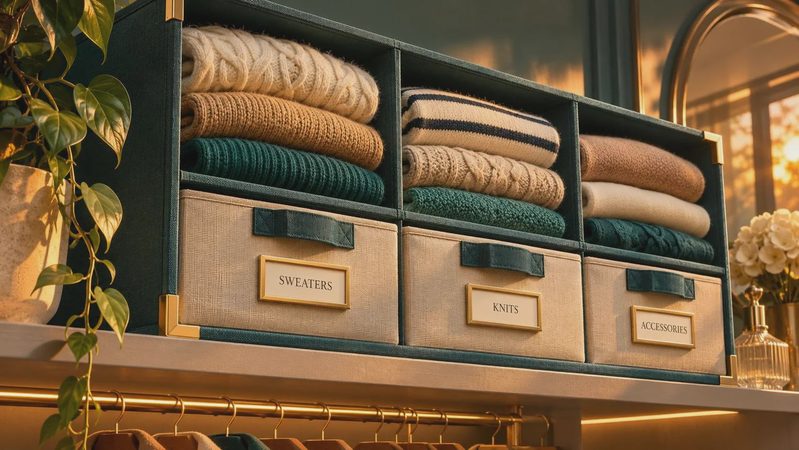
Labels belong on the front-facing side, not just on the lid. If a shelf sits well above eye level, put the label near the bottom front edge so it remains visible from the floor. Transparent bins make contents easier to spot; opaque ones reduce visual clutter but depend more heavily on accurate labels.
Avoid packing textiles tightly in plastic for long periods if moisture or trapped odors are a concern. Make sure everything is dry before storing it, and choose breathable fabric bags for garments that need protection from dust. An upper closet shelf is not the place to hide a damp suitcase or a mystery box from the attic.
Make retrieval part of the design
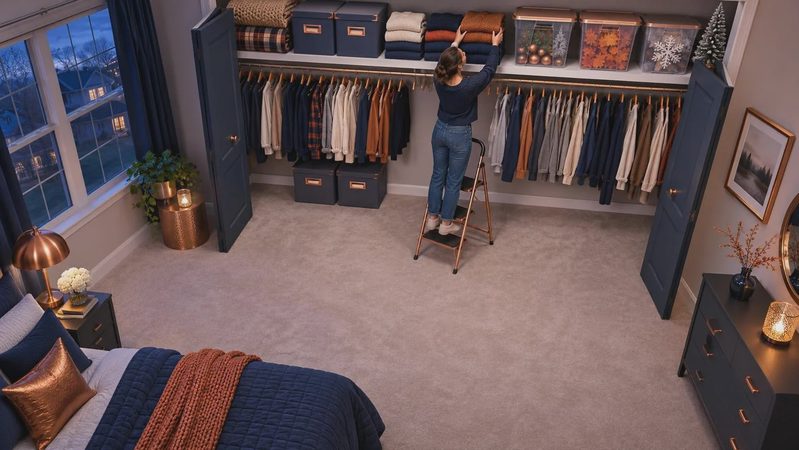
A folding step stool is a legitimate piece of closet equipment, not an admission that the shelf failed. Choose one with a stable platform and store it where you can unfold it fully. Set it on a level floor, face the shelf, and bring one light container down at a time. Don't stand on a drawer, hanging rod, or rolling chair.
Leave clear floor space in front of the shelf for the stool and for turning with a bin in your hands. If an island or hamper blocks that space, the shelf may look accessible on the drawing and fail in daily use. In a walk-in, I like to plan for roughly 36 inches of clear passage where the room allows, then verify the actual stool footprint and door swing. That is a practical planning target, not a universal code requirement.
Lighting matters too. A ceiling fixture directly behind your body can cast a shadow across the shelf. Before adding LED strips inside cabinetry, confirm the fixture is listed for its intended location and follow its installation and clearance instructions. Closet lighting rules depend on the fixture and its distance from storage, so have an electrician check the applicable code when in doubt.
Retrofit an upper shelf without creating a weak point
For an existing closet, inspect the current shelf before loading it. Look for bowing, loose brackets, splitting around screws, and supports pulling away from the wall. Empty a questionable shelf first; adding another box to see whether it holds is not a useful test.
If you're adding brackets, fasten them into framing where the installation calls for it. Wall anchors have different ratings and requirements, and their performance depends on the wall material and condition. Where studs don't land in useful positions, a properly fastened support rail or cleat may solve the layout problem; have a qualified installer assess the wall and expected load.
Finally, account for the shelf board itself. Even well-fastened brackets can't prevent an undersized panel from sagging across too wide a span. Use the shelf manufacturer's span and loading guidance, or ask the installer to specify the board thickness and support spacing for what you intend to store. That bit of planning costs less than replacing a bowed shelf after the closet is full.



No comments yet — be the first to share a thought.