
Above closet storage is one of the most useful places to put items you need occasionally but do not want crowding your daily wardrobe. It is also one of the easiest areas to design badly. A shelf that is too deep becomes a dark cave, a cabinet placed too low steals hanging space, and a poorly anchored unit can damage drywall or fall under load. Start with the wall, the ceiling, and the things you actually plan to store. Pretty bins come later.
Measure the space before choosing a system
Measure from the top of the closet casing or highest hanging rod to the ceiling. In a typical eight-foot room, you may have 18 to 30 inches available. That is enough for folded blankets, luggage, seasonal clothing, spare bedding, and labeled archive boxes. It is not automatically enough for a second row of everyday shelves.
For above closet storage, I usually specify shelves between 12 and 16 inches deep. Twelve inches works for folded sweaters and small containers. Fourteen to 16 inches handles larger comforters or standard storage totes without requiring you to stack items dangerously high. Anything deeper needs a clear reason, because you will lose visibility at the back.
Check the door swing before drawing the installation. A shelf that extends beyond the casing can collide with a bifold door or make a hinged door impossible to open fully. Leave at least 2 inches of clearance from moving hardware, and mark the full swing with painter's tape. This five-minute test prevents the expensive kind of correction.
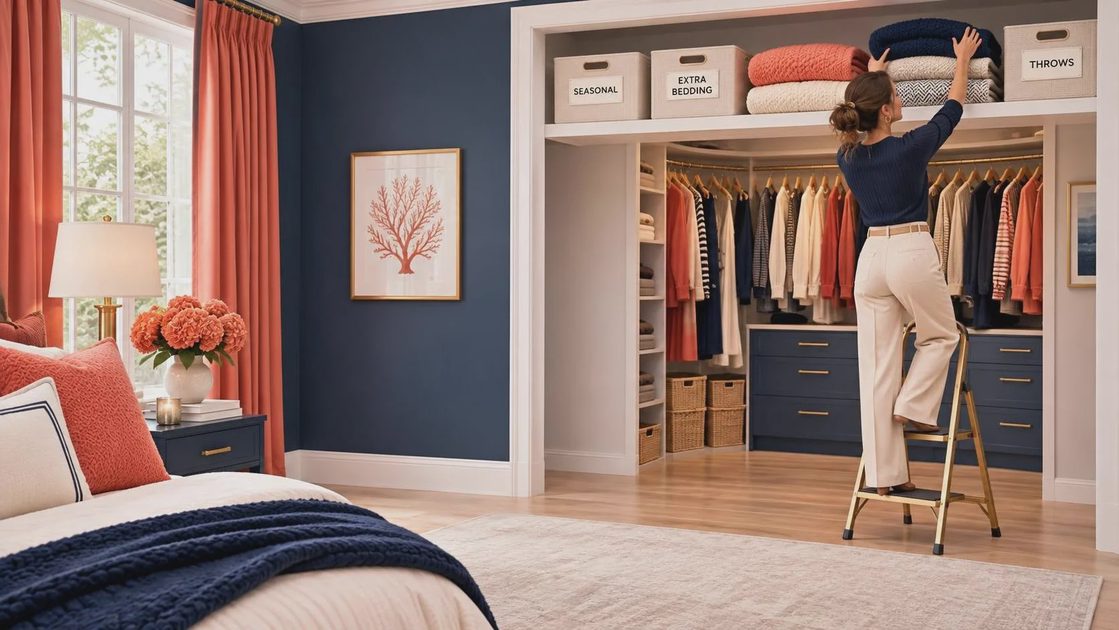
Choose shelves, cabinets, or a simple ledge
Open shelves are the least expensive approach and often the easiest to install. A melamine shelf system from a home improvement store can work well when the edges are finished and the supports are screwed into studs. Use a front lip or a small retaining rail if the closet sits on an upper floor where vibration and movement are common.
Cabinet boxes cost more, but they protect contents from dust and make the room look less visually busy. For above closet storage, shallow wall cabinets are more practical than standard kitchen cabinets. Kitchen boxes are commonly too deep for this location and can make the closet feel top-heavy. If you use cabinets, ask for adjustable shelves and doors that do not interfere with the ceiling trim.
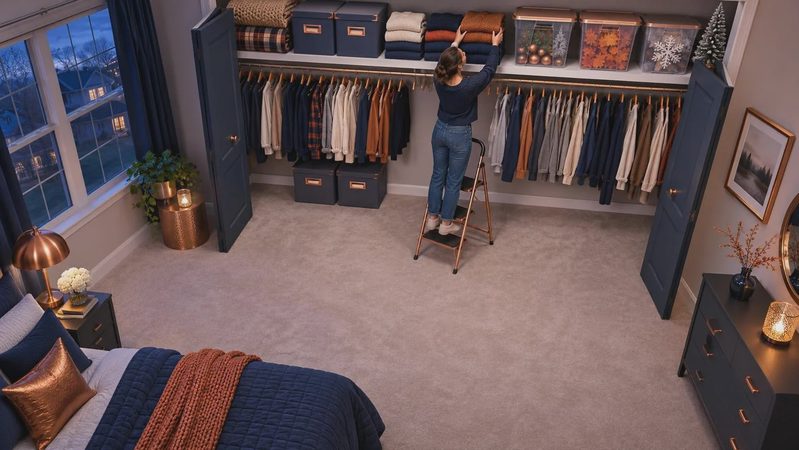
A continuous ledge is another option. It works particularly well around a walk-in closet because it creates a visual line above rods and corners. I like a 12-inch ledge with a 1-inch front edge for lightweight baskets. Do not treat that ledge as a bench. It is not designed for someone to climb onto, and a closet stool should never be replaced with a pile of boxes.
The support detail matters more than the finish. Locate studs with a finder, confirm them with a small test hole, and use fasteners appropriate to the bracket and wall construction. Drywall anchors are acceptable for light decorative containers, not a shelf loaded with books, shoes, or luggage. In older houses, including many Oklahoma City homes, walls may not be perfectly square, so measure each section instead of assuming the room repeats accurately.
Plan what goes up high
The best above closet storage contains items used monthly, seasonally, or rarely. Examples include ski clothing, holiday garments, extra towels, travel bags, spare hangers, and sentimental pieces that do not belong in the daily rotation. Put lightweight bedding and empty luggage higher than dense objects such as shoes or canned supplies. If you cannot safely lift it overhead, it does not belong overhead.
Use containers that fit the opening with a little breathing room. A 13-inch-high bin will not slide easily into a 12-inch opening, even if the listed measurement seems close. Leave 2 to 3 inches of vertical clearance above a container so you can grip it without scraping your knuckles. Matching boxes are optional; matching dimensions are not.
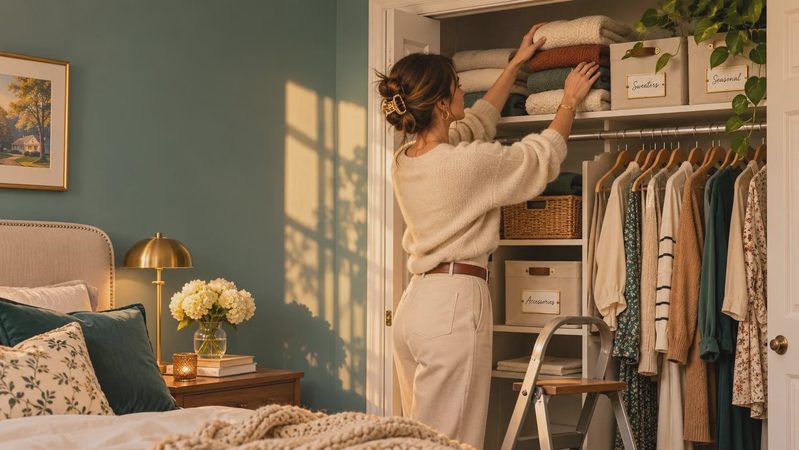
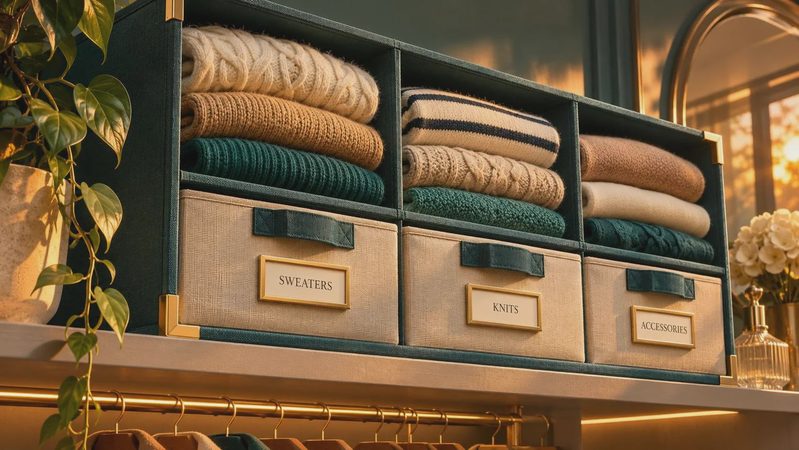
Label both the front and the lid. When containers sit above eye level, a front label is the one you will actually read. Group by task rather than vague categories. “Winter scarves and gloves” is better than “accessories,” and “guest bedding” is better than “linens.” This is the difference between storage that saves time and storage that creates a second closet full of mystery boxes.
For folded clothing, keep stacks below 10 inches when possible. Taller stacks slump, hide the bottom items, and encourage you to pull out the entire pile. If you need more capacity, use two smaller shelves rather than one tall compartment.

Do not forget lighting and access
A shelf above a rod often sits in the shadow of the room's ceiling fixture. Before installing anything, identify the lighting circuit and decide whether the upper shelf will block the fixture. Recessed LED lights or a shallow flush-mount fixture can distribute light better than one pendant in the center. In a reach-in closet, an LED strip under the upper shelf can illuminate the hanging clothes below, but install it where clothing cannot snag the wiring.
Do not place an outlet behind a permanent cabinet unless you have a specific reason and access plan. I have seen a shoe wall installed over the only outlet in a dressing room, leaving the homeowner unable to use a steamer without an extension cord. If you want charging space, specify an outlet on the side panel or in a nearby drawer before the drywall is finished.
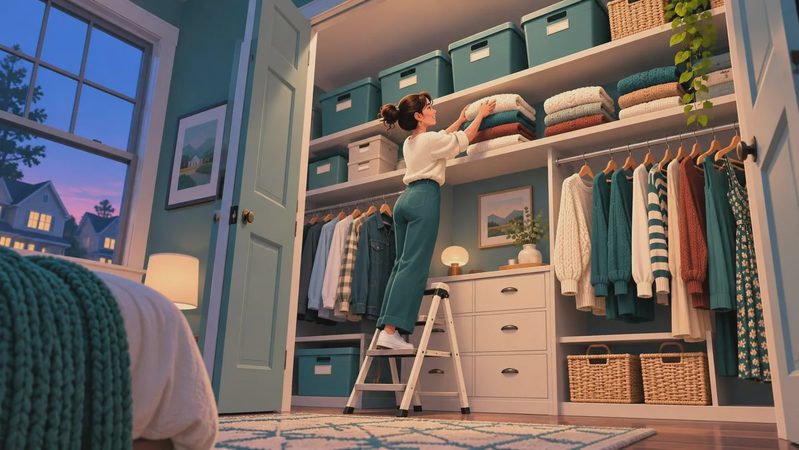
Access deserves the same attention as capacity. A folding step stool that is 18 to 22 inches high can help with a standard eight-foot ceiling, but it needs a place to park. A narrow stool beside the closet door is more useful than one stored in a garage. Do not design shelves so high that every retrieval requires balancing on a chair.
Match the installation to your budget
A basic above closet storage project can cost roughly $100 to $300 for painted shelves, brackets, and bins when you do the work yourself. A more finished built-in arrangement with trim, cabinet doors, lighting changes, and professional installation can easily reach $1,000 to $3,000 or more, depending on wall length and materials. Spend money first on secure framing, accurate fit, and lighting. Decorative hardware is last.
Paint-grade plywood with iron-on edge banding offers a stronger custom result than thin particleboard, especially across a long span. Melamine is practical and easy to clean, but long shelves need adequate support to prevent sagging. Add a center bracket or vertical divider when the span approaches 30 to 36 inches, particularly for heavy bins.
If you are renovating the entire closet, photograph the walls before closing them. Record stud locations, wire paths, and the height of every junction box. Future you will appreciate having that information before drilling into a finished cabinet wall.
A final field check before you install
Stand in the closet and reach toward the proposed shelf with the rod and doors in place. Can you remove the front bin without hitting the door? Can you see the label? Can you carry a folded blanket through the aisle without twisting sideways? The minimum comfortable closet aisle is about 36 inches, and a storage solution should not reduce that clearance at corners or entrances.
Above closet storage should make infrequent items easier to manage, not turn your closet into a warehouse. Keep the structure secure, the depth controlled, the labels readable, and the weight sensible. If you plan those four details before buying containers, the finished installation will work at 6:15 in the morning, not just in a photograph.

No comments yet — be the first to share a thought.