
Inexpensive closet organizers are useful only when they fit the room, the wall, and the clothes you actually own. A $40 shelf that sags under folded jeans is not a bargain; it is a replacement project waiting to happen. Before you buy bins or search for matching hangers, measure the closet, find the studs, and study how the door opens. The structure determines whether a budget system performs or becomes another pile of parts in the garage.
Start with the closet bones
Measure the back wall, each side wall, ceiling height, and the clear distance from the door opening to the opposite wall. Write down obstructions, including baseboards, trim, outlets, vents, and attic access panels. A standard hanging section needs roughly 24 inches of depth, while a comfortable aisle should be at least 36 inches wide. If you are designing a walk-in closet, mark those dimensions on the floor with painter's tape before ordering anything.
The door swing is an easy detail to miss. A hinged door can steal several feet of usable wall, and a bifold door may block drawers when open. Sliding doors save swing space but can prevent access to part of the closet at a time. In one Oklahoma City renovation, the homeowner planned a tall shoe cabinet on the wall behind the door. The cabinet fit on paper; in real life, the door handle hit it every time. We moved the cabinet six inches and avoided a costly return.
Find studs with a stud finder, then confirm them with a small test hole if the wall is covered in thick plaster. Closet towers loaded with shoes and denim need solid attachment points. Drywall anchors can help with light accessories, but they should not carry a heavily packed shelf or a full hanging rod by themselves.

Where inexpensive closet organizers earn their price
The strongest budget choices usually use a combination of fixed components and adjustable parts. Wire shelving from ClosetMaid or Rubbermaid is inexpensive, ventilated, and easy to cut for an awkward wall. It is less polished than a laminate system, but it handles everyday storage well when mounted correctly. Elfa systems from The Container Store cost more, though their adjustable standards make them practical when your wardrobe changes often.
IKEA PAX can be a good middle-ground for a larger project, especially when you want drawers and doors without paying for full custom cabinetry. It requires careful assembly and a level floor. Do not assume the published dimensions account for baseboards or uneven walls. A three-quarter-inch gap can determine whether a tall frame slides into place or gets trapped in the hallway.
For a small reach-in, inexpensive closet organizers often work best as separate pieces rather than one oversized kit. Use a double-hang rod for shirts and pants, a single higher rod for dresses, and one shelf above each zone. A basic wire shelf and rod kit can cost $50 to $150, while a small laminate tower may run $150 to $400. The right choice depends less on the label and more on how much weight the wall must support.
Spend money where failure is expensive
Do not economize on fasteners, wall attachment, or the support brackets under long shelves. A shelf spanning more than 36 inches needs support designed for its material and load. Particleboard shelves are affordable, but a long unsupported span can bow under sweaters. Solid wood costs more and may need finishing, while melamine offers a clean surface at a moderate price but can chip when cut carelessly.
A useful budget division is to spend first on the parts that keep the system upright, second on the parts that touch your wardrobe, and last on visual extras. Proper screws, standards, brackets, and a level matter more than decorative end caps. Drawers are convenient but expensive; a six-drawer tower can add several hundred dollars. If the budget is tight, install fixed shelves now and add drawer units later.
Closet lighting deserves a line in the budget too. A ceiling fixture in the center may leave the corners dark, especially under deep shelves. An electrician can add a switched fixture or approved low-voltage lighting before the organizers go in. Never hide an outlet behind a permanent tower without recording its location. I have opened enough finished closets to know that the forgotten outlet usually becomes the first complaint.
Match the layout to the wardrobe
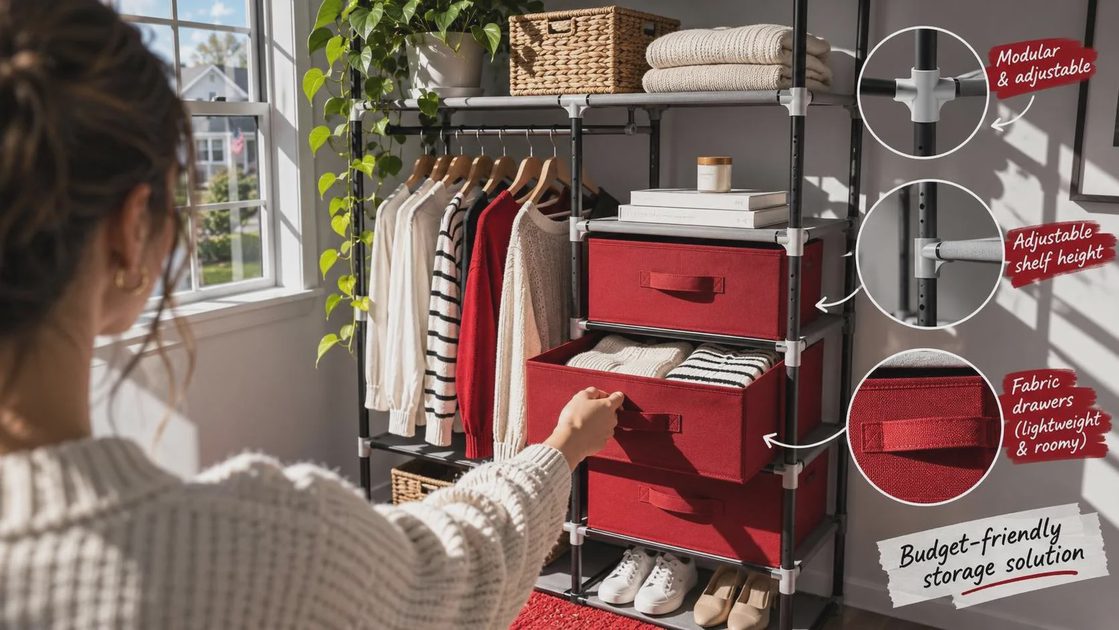
Count categories instead of guessing. If you own 40 blouses, 12 pairs of pants, long coats, and only a few folded items, do not devote half the closet to shelves. A double-hang section uses vertical space efficiently: place the lower rod about 40 inches above the floor and the upper rod around 80 inches, adjusting for ceiling height and garment length. Long dresses and coats generally need 60 to 68 inches of uninterrupted hanging height.
Keep folded clothing on shelves between 12 and 16 inches deep. Deeper shelves often look generous but create a second row that disappears from view. For shoes, 10 to 12 inches of depth is usually enough for adult pairs, although boots need more height. If inexpensive closet organizers include narrow shoe shelves, measure your largest sneakers and boots before committing. A pretty shelf that cannot hold winter footwear is decorative storage, not useful storage.
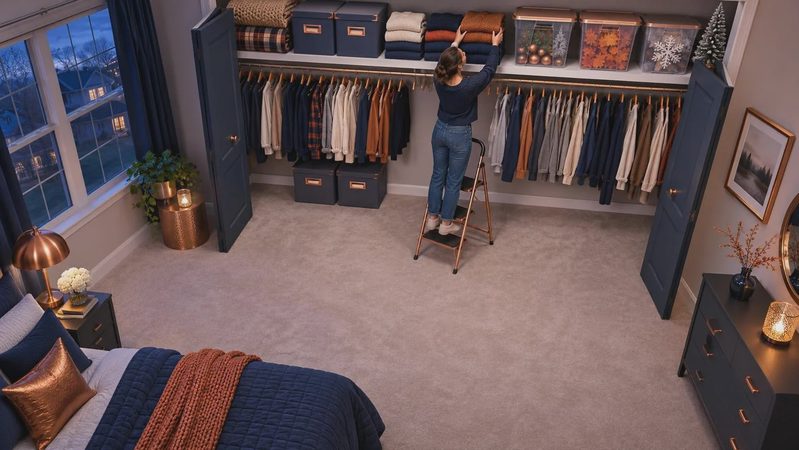
Use the hard-to-reach upper shelf for luggage, spare bedding, and seasonal items. In Oklahoma City, I rotate wool coats and heavy boots after winter rather than forcing every season into the prime middle zone. Clear labeled bins make that rotation faster and keep the daily sections from becoming overloaded.
A practical installation sequence
Assemble the system outside the closet when possible, but do not fully tighten every connection until the frame is positioned and level. Mark the wall, locate studs, install the main rails or standards, and check for plumb. Then add towers, shelves, and rods from the most stable section outward. Keep a drill, level, tape measure, stud finder, pencil, and the manufacturer's weight information nearby.
Before loading clothes, pull gently on each tower and inspect every bracket. Put the heaviest items on lower shelves, not at the far end of a long upper span. Hang a few garments and open the door repeatedly. This catches collisions that an empty room will not reveal. Inexpensive closet organizers last longer when installation is treated as a structural job instead of a quick Saturday afternoon assembly.
A typical small closet refresh can take four to eight hours once the parts are on site. Add time for wall repairs, cutting, leveling, or an electrician. Rushing the mounting step to finish the visual portion is how shelves end up tilted and rods pull out of drywall.
The budget that makes sense
For a reach-in closet, plan roughly $150 to $500 for a straightforward wire or laminate setup, excluding major electrical work. A larger walk-in using adjustable standards, towers, and several drawers can land between $600 and $1,500. Custom cabinetry often climbs well beyond that range. Inexpensive closet organizers make the most sense when you want better function now and the option to upgrade one section later.
Buy the smallest number of components that solves the actual storage problem. A $300 island in a narrow walk-in is wasted money if it leaves only a 28-inch aisle. A second hanging rod, properly mounted, may add more daily value than a decorative cabinet. Leave at least 36 inches for a usable walkway and more if two people need to dress in the space.
The finished closet should make the next morning easier, not require a maintenance routine. Measure twice, anchor into structure, protect the clearances, and select storage around your wardrobe. Inexpensive closet organizers can deliver a solid result when the plan comes before the shopping cart. Start with a taped floor plan and a realistic inventory, then choose the system that fits those facts.


No comments yet — be the first to share a thought.