
The best coat closet organization ideas begin with the closet itself, not a basket haul. Measure the opening, find the studs, check the door swing, and count what actually needs to live there. A shallow closet packed with winter coats, shoes, umbrellas, bags, and cleaning supplies will fail no matter how attractive the bins look. I have seen plenty of entry closets where the owner spent $200 on matching containers, then discovered the door could not open far enough to reach them.
Start With the Closet's Physical Limits
Empty the closet completely before buying anything. Measure its width, depth, and height, then measure the door opening separately. A standard coat closet is often about 24 inches deep, which is enough for hangers but not enough for a second storage layer behind the coats. If the closet is closer to 18 inches deep, bulky garments will press against the door or hang outside the frame.
Locate the studs with a stud finder before installing a rail or tall shelving. A loaded coat rod can carry far more weight than a lightweight wall anchor should handle. Mark the door swing, baseboards, trim, and any electrical outlet on the wall. If you are remodeling, do not bury an outlet behind fixed shelving; one of my clients did exactly that and lost the only convenient place to charge a cordless vacuum.
A usable walkway matters outside the closet, too. Leave roughly 36 inches in front of an open door when possible. In a narrow hallway, a sliding or bifold door can recover floor space, but it will not solve a closet that is too shallow. These measurements are the foundation of useful coat closet organization ideas.
Put the Rod at the Right Height
For a typical reach-in closet, install the main rod around 66 inches above the floor. That height works for adult coats while leaving room beneath for shoes, boots, or a low drawer unit. If children use the closet, add a second rod at approximately 36 to 42 inches. Do not simply lower the only rod; adults still need a place for long coats and rain jackets.
Long garments need a clear drop of about 60 inches, while shirts, jackets, and folded trousers can share a shorter hanging zone. A double-rod layout can nearly double hanging capacity, but only if the lower section does not block shelves or footwear. Keep at least 3 inches between the end of the rod and the side wall so hangers can slide instead of catching on the trim.
Use a solid wood or metal rod with properly mounted brackets. I prefer a simple oval or round metal rod over decorative hardware that reduces usable width. Velvet hangers are helpful because they prevent slipping, but they are not a structural fix. If the rod is bending, add a center support anchored into a stud.
Give Shoes and Boots Their Own Zone
Floor clutter is usually the first visible failure in an entry closet. A single shelf placed 7 to 9 inches above the floor handles everyday sneakers and flats. Boots need more clearance: allow about 14 inches for ankle boots and up to 18 inches for taller pairs. Measure your largest footwear before fixing the shelf height.
A slatted shelf or ventilated metal rack is better for damp shoes than a solid cabinet shelf. Oklahoma rain, snowmelt, and muddy school mornings can leave moisture trapped underneath footwear. Let shoes dry outside the closet before putting them away, and use a washable boot tray near the entry for the wettest pairs.
Do not fill the entire floor with shoe storage. Leave one open section for a vacuum, pet supplies, or a small stool. If the closet is narrow, a vertical shoe rack on the back of the door can work, but check that the rack does not reduce the opening enough to crush hanging coats. The strongest coat closet organization ideas assign every bulky category a specific footprint.
Use the Door Without Overloading It
The back of the door is valuable, but it is not an unlimited wall. An over-the-door rack can hold scarves, gloves, hats, and lightweight bags. It is less suitable for a dozen heavy handbags or loaded backpacks because the weight pulls on the hinges and can cause the door to sag.
For a cleaner installation, mount a narrow rail or peg strip directly to the door, using screws and appropriate backing. Keep the deepest items below the handle and away from the jamb. A row of hooks spaced 5 to 6 inches apart is enough for small accessories without creating a tangled wall of fabric.
If the door opens into a hallway, use low-profile hooks rather than bulky baskets. Before drilling, tape the proposed rack in place and close the door several times. This five-minute test can reveal an expensive clearance problem. One practical solution is a high row for hats and a lower row for children’s jackets, but leave the upper hinge area clear.
Build Storage Around Real Seasonal Use
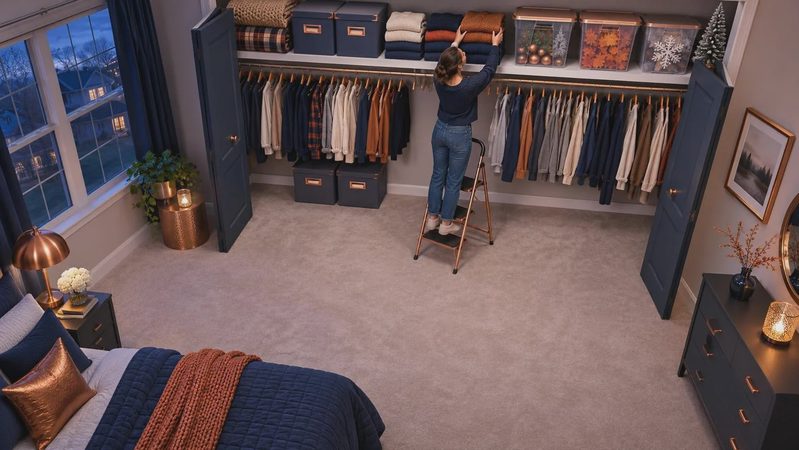
A coat closet should not carry every garment you own all year. In a four-season climate, keep current coats, rainwear, and daily shoes at eye level. Move heavy parkas, holiday accessories, and out-of-season hats to labeled bins on the highest shelf. A shelf 12 to 16 inches below the ceiling is useful for soft goods, provided you can reach it safely with a stable step stool.
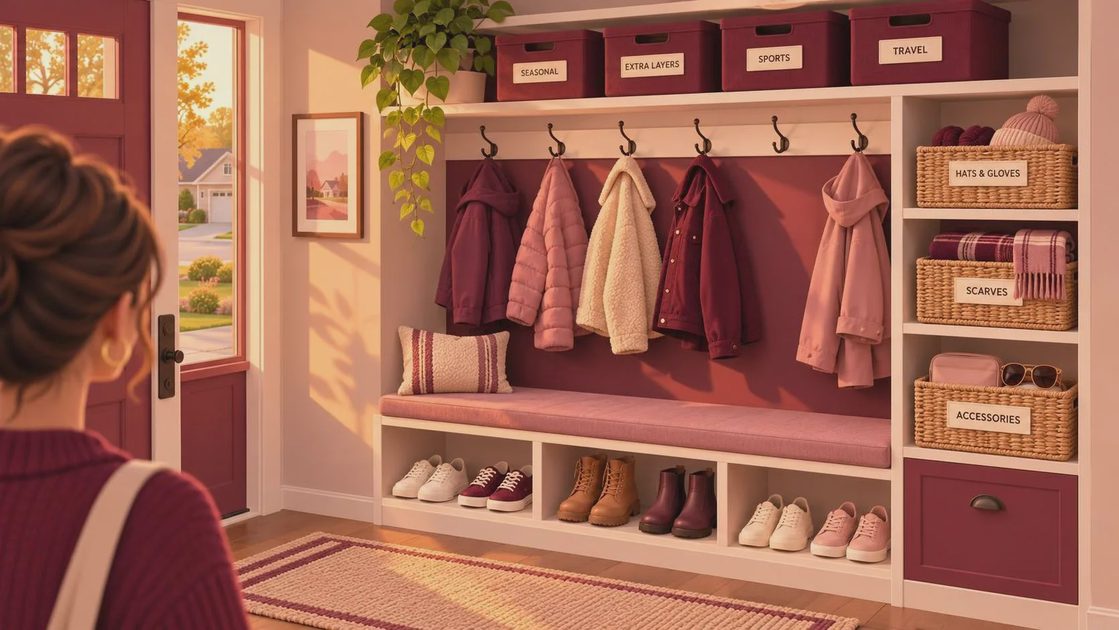
Use rigid bins for items that need protection from dust and soft fabric bags for sweaters or scarves. Avoid vacuum bags for structured coats because compression can crease insulation and distort shoulders. Label bins by category rather than by vague terms such as miscellaneous. “Winter gloves,” “swim gear,” and “guest scarves” tell you what is inside without opening every container.
One of the most effective coat closet organization ideas is a monthly reset. Return empty hangers to one side, remove abandoned receipts and wrappers, pair loose gloves, and check whether shoes still fit the household. This takes less than ten minutes and prevents small messes from becoming a full closet excavation.
Add Light Before You Add More Storage
A dark closet makes every system harder to use. If there is no existing fixture, a rechargeable LED light can be a reasonable low-cost improvement. Choose a motion-sensor model with a wide beam, then position it where hanging coats will not block the light. Battery lights are convenient, but remember to test and replace the batteries before winter.
For a renovation, have an electrician place the fixture toward the front of the closet rather than behind the rod. A ceiling fixture with a frosted lens gives more even light than a bright bare bulb. Do not install a switch where an open door covers it. The switch should be reachable from the hallway or just inside the opening.
Lighting also exposes the dirt that storage hides. Paint the interior a light neutral color with washable satin or eggshell paint, especially near the floor and door edge. This is not about making the closet photograph well; it lets you find a missing shoe, a spilled drink, or mildew starting on a damp mat.
A Practical Layout for a Small Entry Closet
For a 36-inch-wide closet, reserve one side for hanging coats and the other for shallow shelves if the depth allows. Put everyday footwear on the lowest shelf, bags at waist height, and seasonal bins above the rod. Keep one hook at child height if children use the entry, but avoid turning every wall into a hook field.
For a 60-inch-wide closet, use a central hanging section with shelves at one or both ends. A 12-inch-wide vertical slot can hold an umbrella stand, folding stool, or vacuum attachments. If you have more coats than the rod can handle, do not cram them together; add an outside wardrobe or edit the collection. Hangers need room to slide, and damp coats need air circulation.
The finished closet should support the way your household leaves the house at 6:15 AM, not an imaginary lifestyle. The most dependable coat closet organization ideas are measured, accessible, and slightly boring. That is a compliment. When the rod is anchored, the shoes have a home, the light reaches the back, and the door still closes, the system is doing its job.




No comments yet — be the first to share a thought.